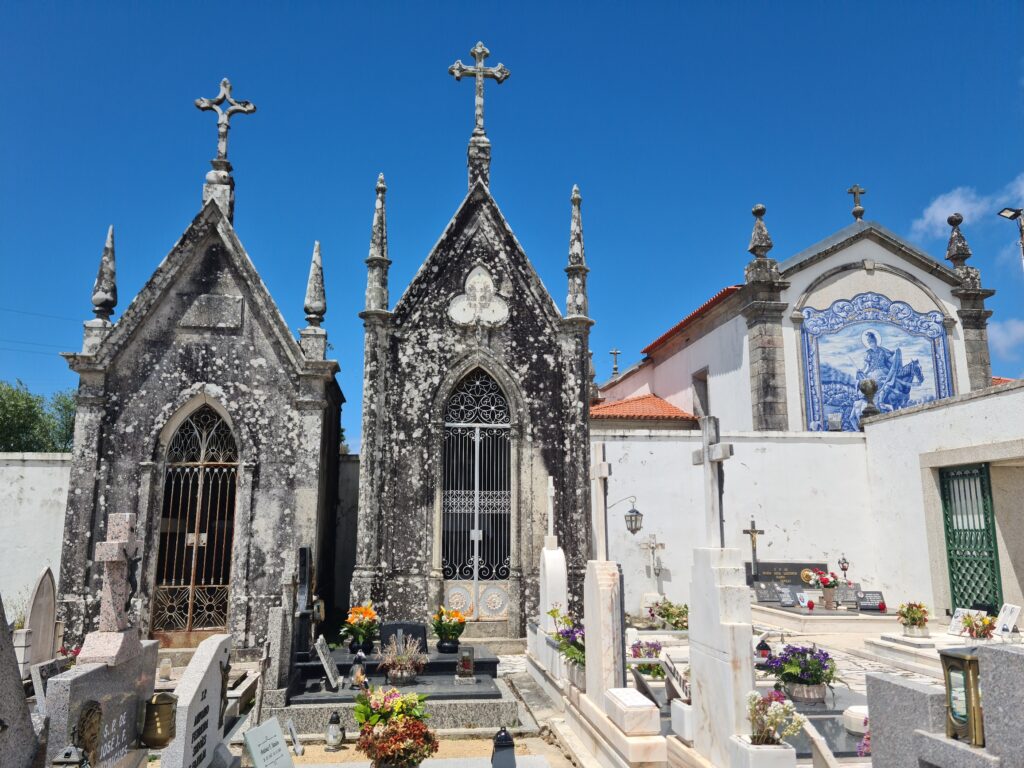
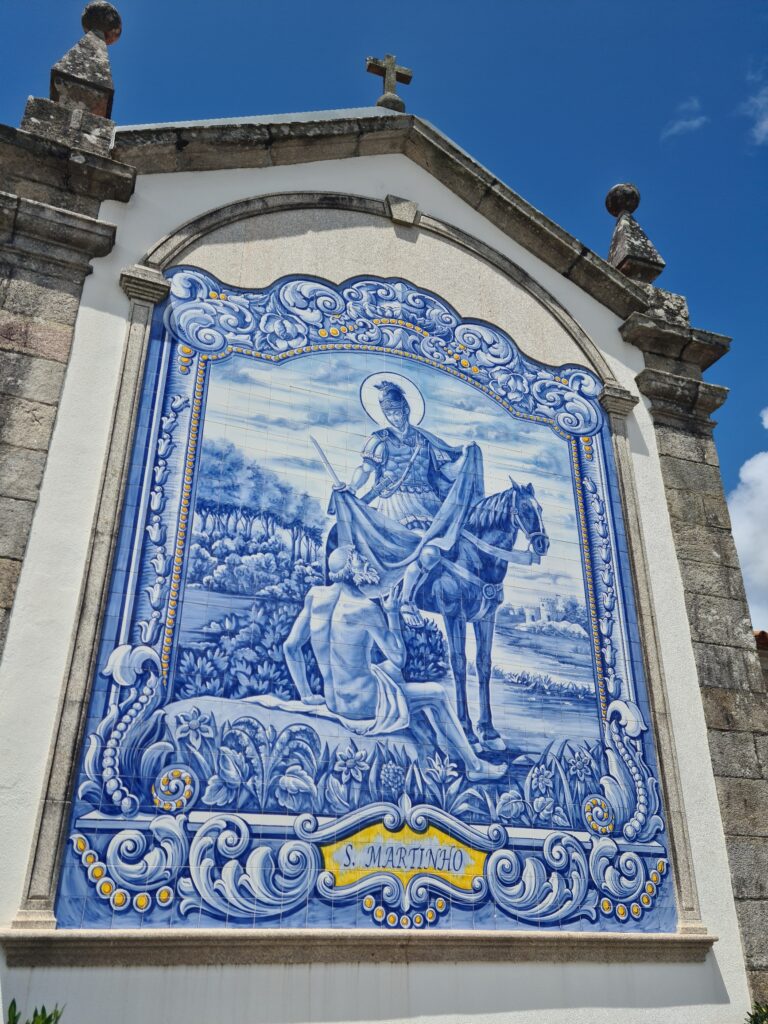
On our way to Vila Praia de Âncora, we happened upon Igreja de São Martinho (St Martin’s Church), with its wonderful tile depiction of the iconic moment when St Martin shreds his cloak to share with a beggar.
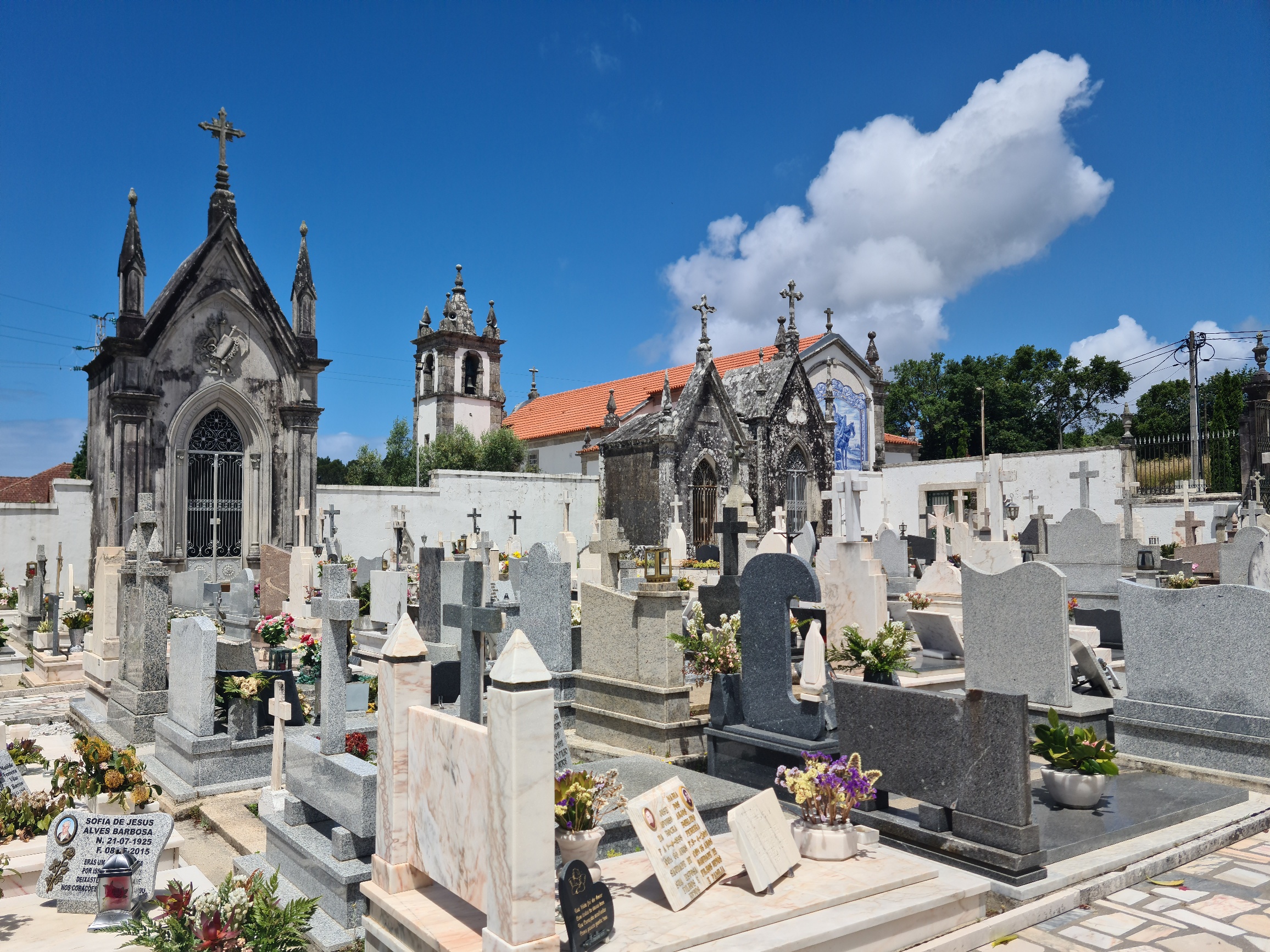
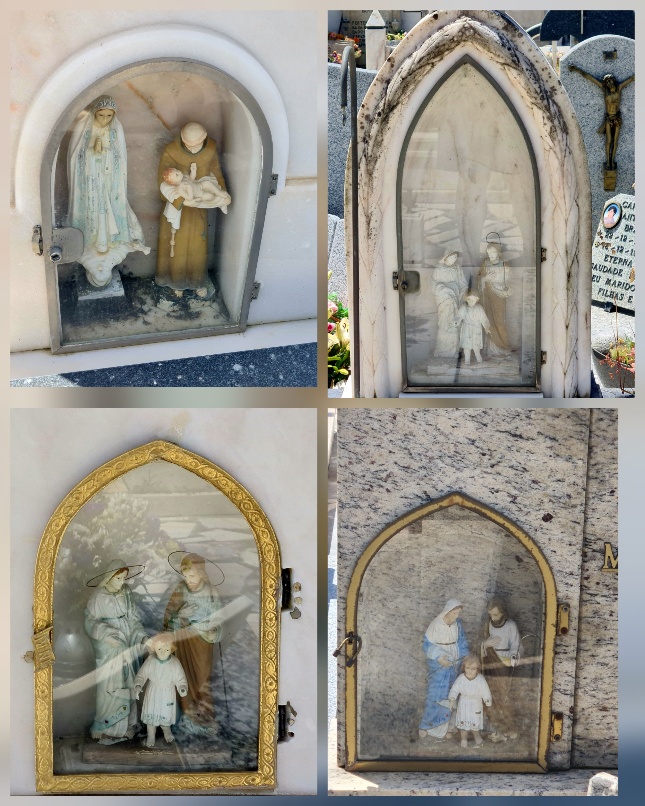
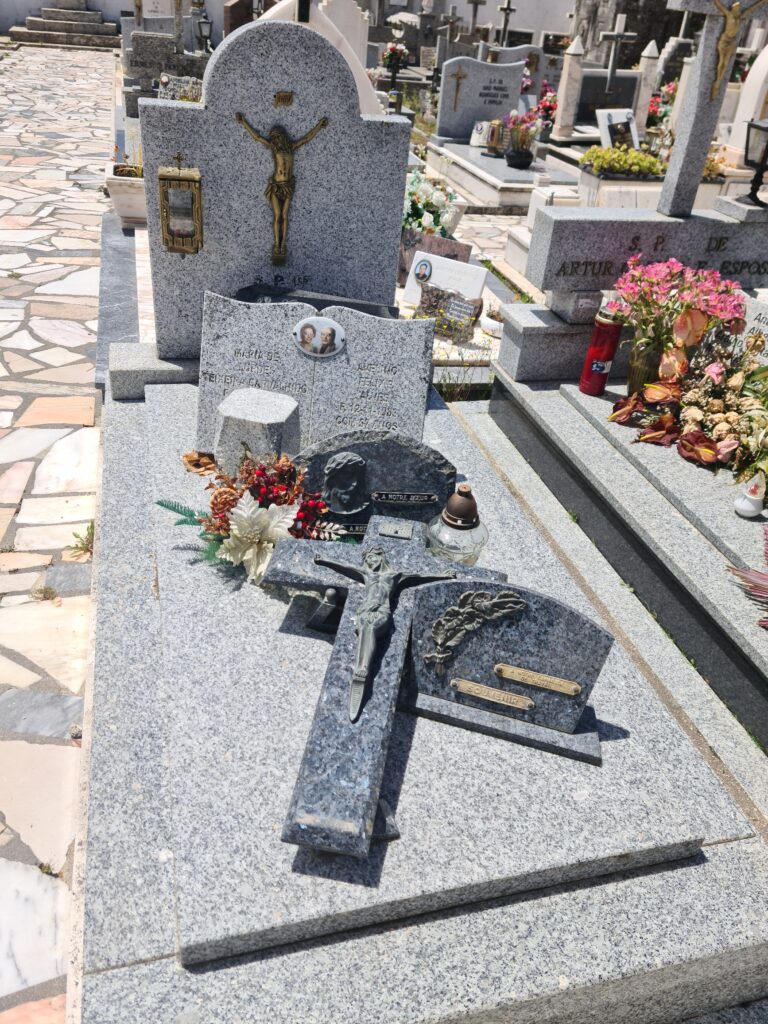
Tucked behind the church is the village cemetery. I’d not seen such an array of memorial cabinets before. It would seem that these are a thing in this part of the world.
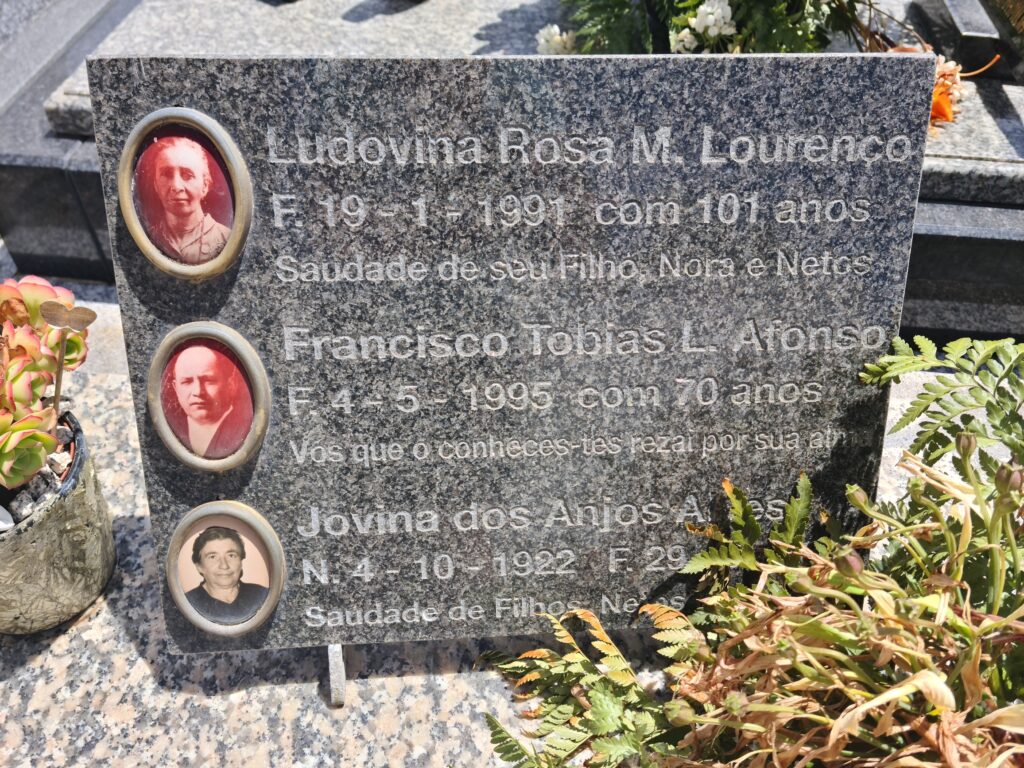
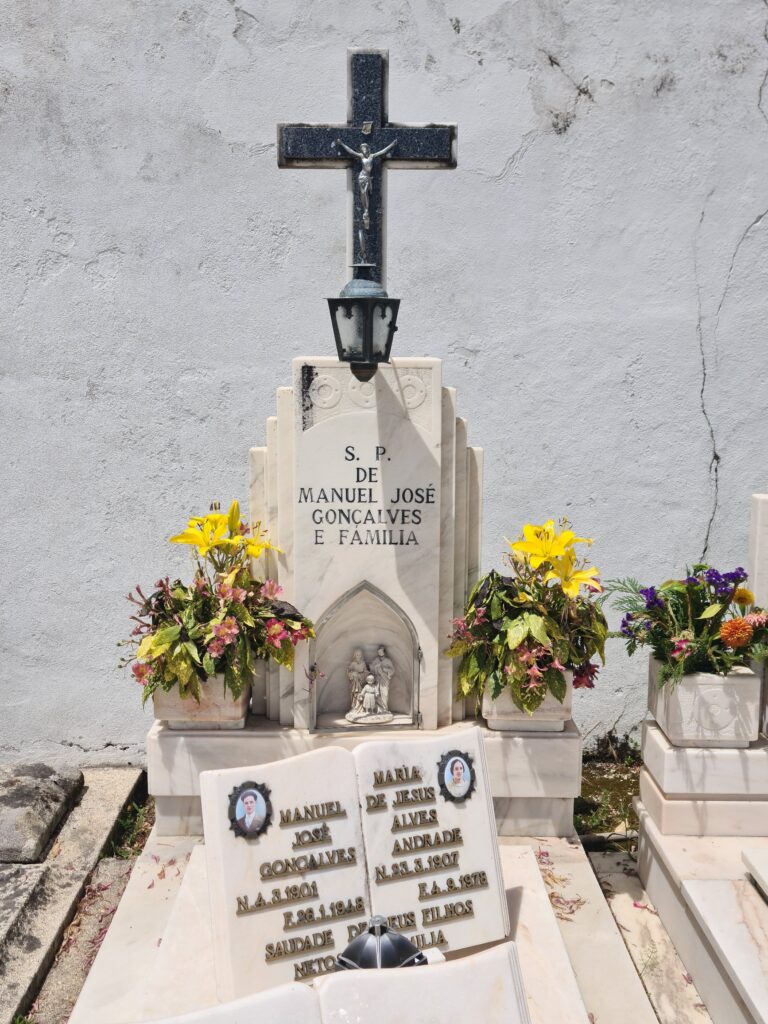
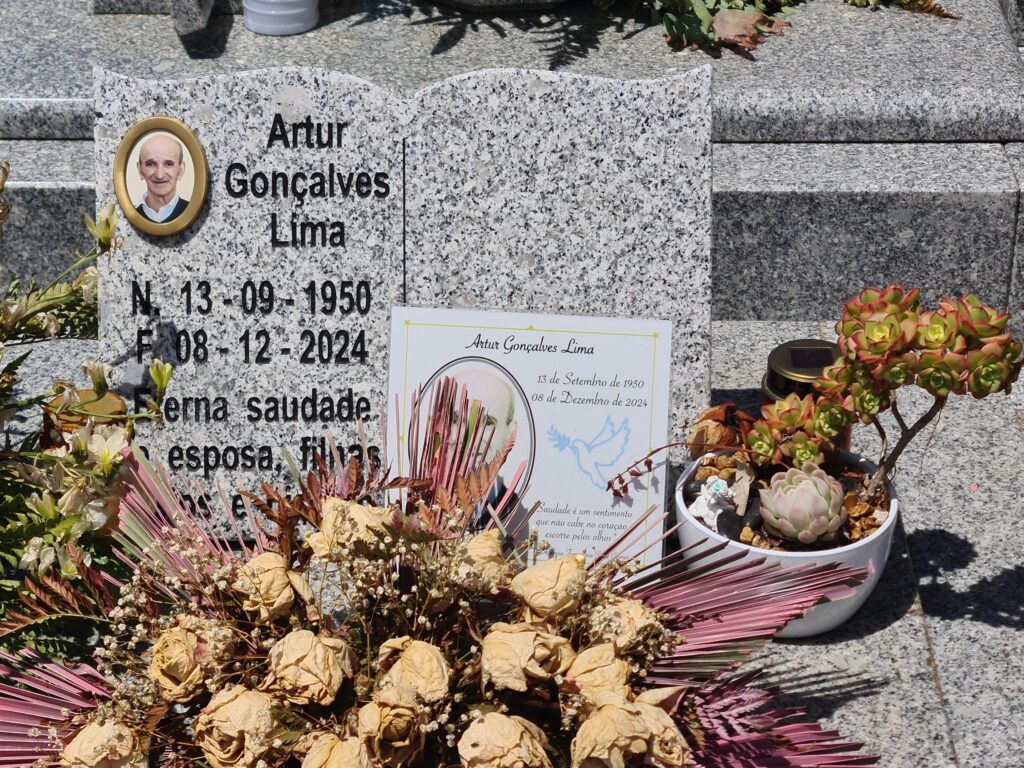
Here, as in many cemeteries in Europe, photos show who is in the grave. I first saw this in a village in the Italian Alps. Some of the photos I’ve seen over the years are far from flattering. I’ve often wondered if the choice might be a final word – a piece of revenge – or more to do with what was available.
I particularly liked this one of Artur, though as it seemed to capture a man very much alive.
Bethan Bell, writing for the BBC, has an interesting piece on the Victorian practice of death photography.
Victorian nurseries were plagued by measles, diphtheria, scarlet fever, rubella – all of which could be fatal. It was often the first time families thought of having a photograph taken – it was the last chance to have a permanent likeness of a beloved child.
Anyways, it’s not something I’d fancy, having a photo of me on my headstone. But each to their own.