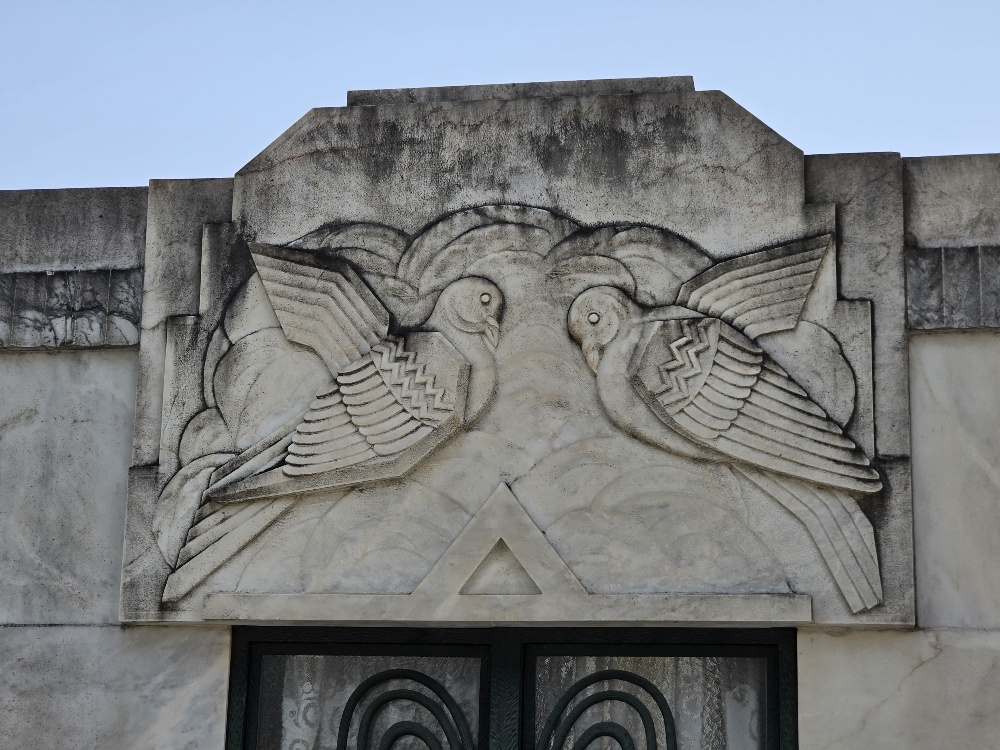
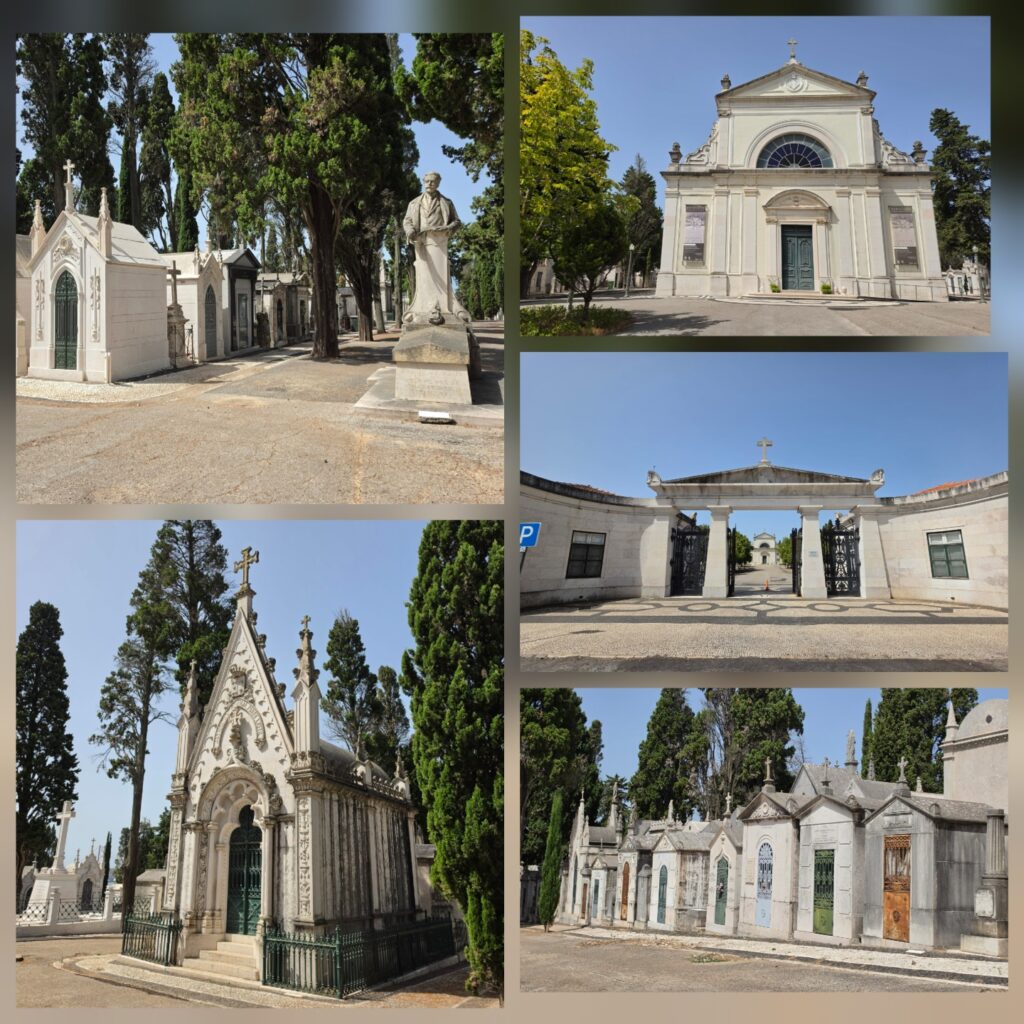
At the end of the much-touted (and somewhat overrated) Tram 28 in Lisbon, sits Cemitério dos Prazeres. Founded in 1833 after an outbreak of cholera, the cemetery is all about mausoleums – freestanding monuments or buildings that enclose a burial chamber. It was like walking into a rather ornate housing estate for tiny homes.
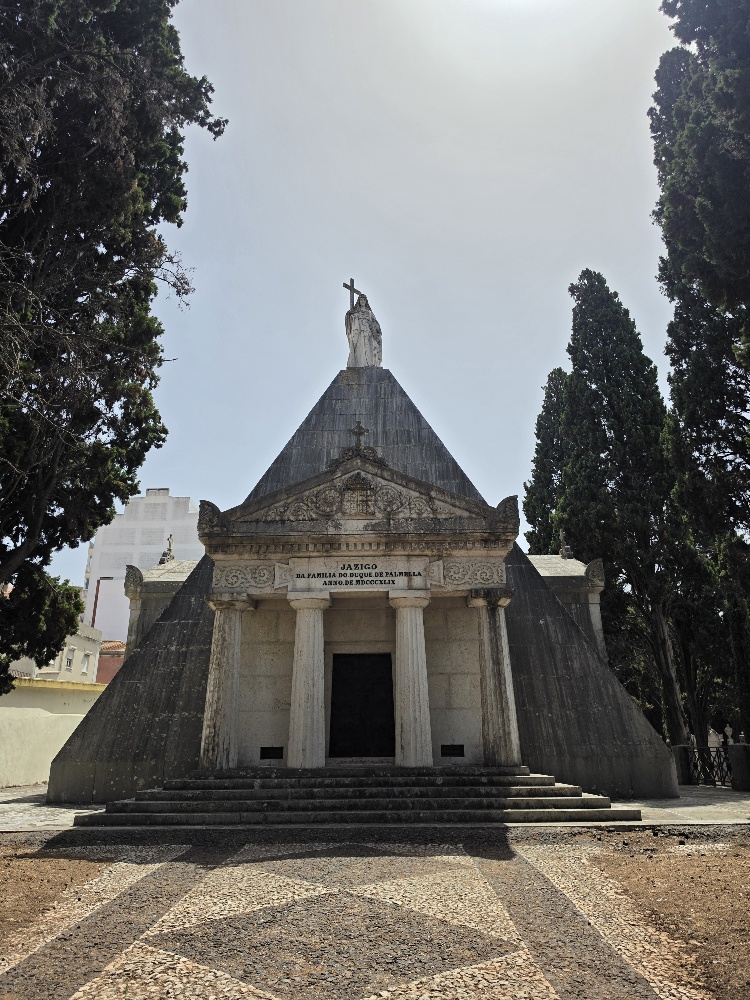
One of the cemetery’s many attractions is the Mausoleum of the Dukes of Palmella, the largest of its kind in Europe, with capacity for 200 dead. The family [headed by Dom Pedro de Sousa Holstein, 1st Duke of Palmela, who served as the country’s first Prime Minister and was a Freemason, one of many Freemasons buried here] are in the centre section with servants to the sides (women on the north, men on the south). It was a blistering hot day with the sun shining from the wrong direction. I don’t know if it was open. I assumed it wasn’t. But I did find this video of the interior, and wow. Just wow. Stunning. BTW, Jazigo is Portuguese for burial plot.
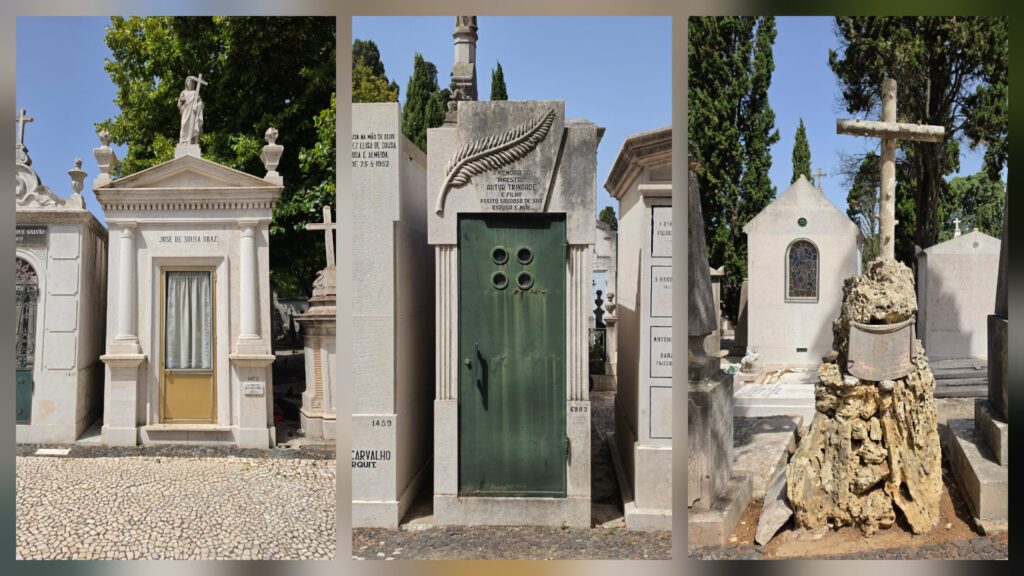
Walking up and down the avenues, I was intrigued by the doors. And the curtains. And the windows. All lending credence to my fanciful notion of an estate of tiny homes.
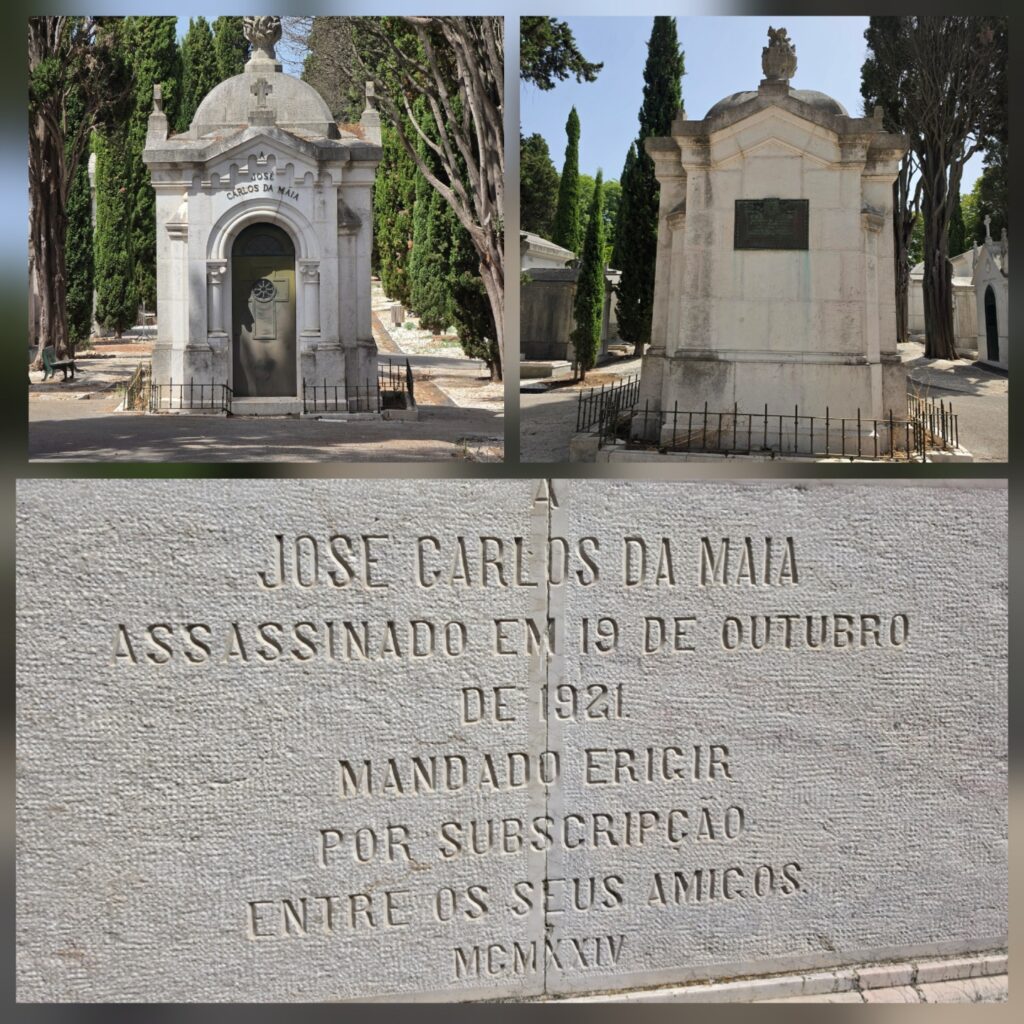
Like every cemetery in the world, there are myriad stories in the epitaphs. I could have spent a whole day here, wandering and researching. But in the winter, when it wasn’t so hot. Naval officer and politician, José Carlos da Maia (1877–1921) was assassinated in Lisbon during the infamous “Bloody Night” (Noite Sanguinenta) on October 19, 1921. The monument was erected by his friends.
On the night of October 19, 1921, a group of sailors and Republican guards roam the streets of Lisbon in what would come to be known as the “ghost van.” Led by Corporal Abel Olímpio, known by the nickname “Golden Tooth,” the gang assassinates several political and military figures, namely the heroes of the 1910 revolution, Machado Santos and Carlos da Maia. The crimes shock the country. The newspapers call it the “Bloody Night” (Noite Sangrenta, in Portuguese).
I’ve noted the movie, dramatised against this reality, as one to watch.
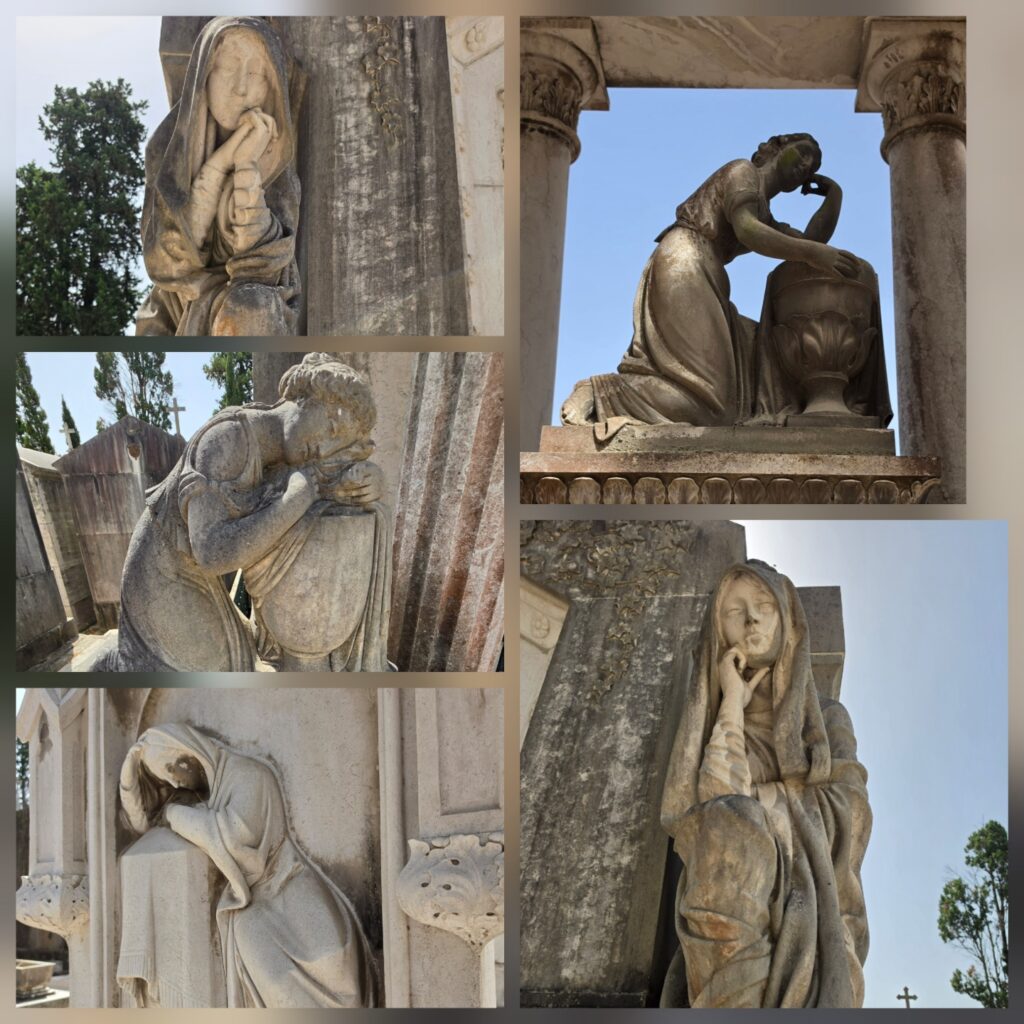
The statuary reminded me very much of Cimitero Monumentale in Milan. Lots of grieving women and a notable absence of grieving men.
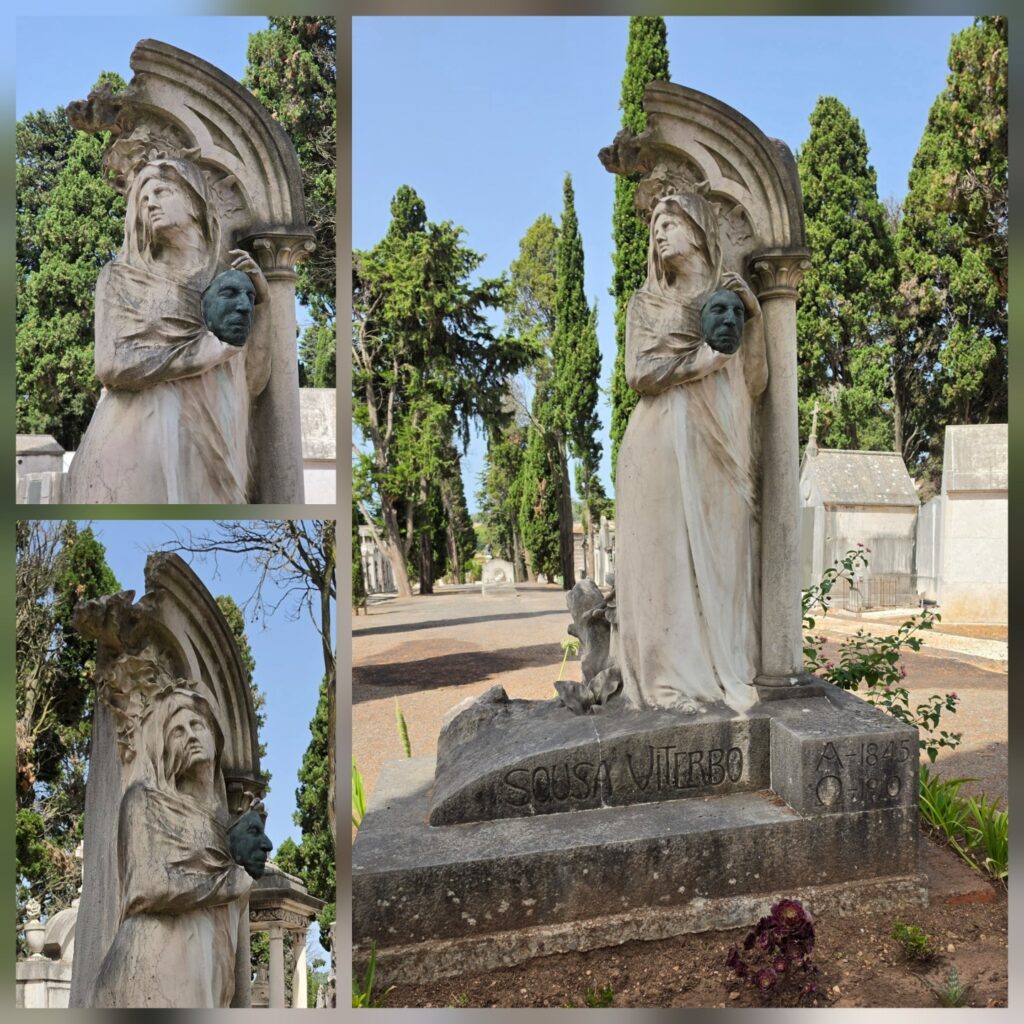
In Barcelona, we visited Problenou Cemetery to see the Kiss of Death. Here in Lisbon, we saw the mask of death. Intriguing stuff. It marked the full stop on the life of Sousa Viberbo – Portuguese author, journalist, historian, and archaeologist. He was a professor of archaeology at the Lisbon Academy of Fine Arts. The metal mask the woman is holding is an actual metal cast of his face taken when he died. That’s something I can see catching on.
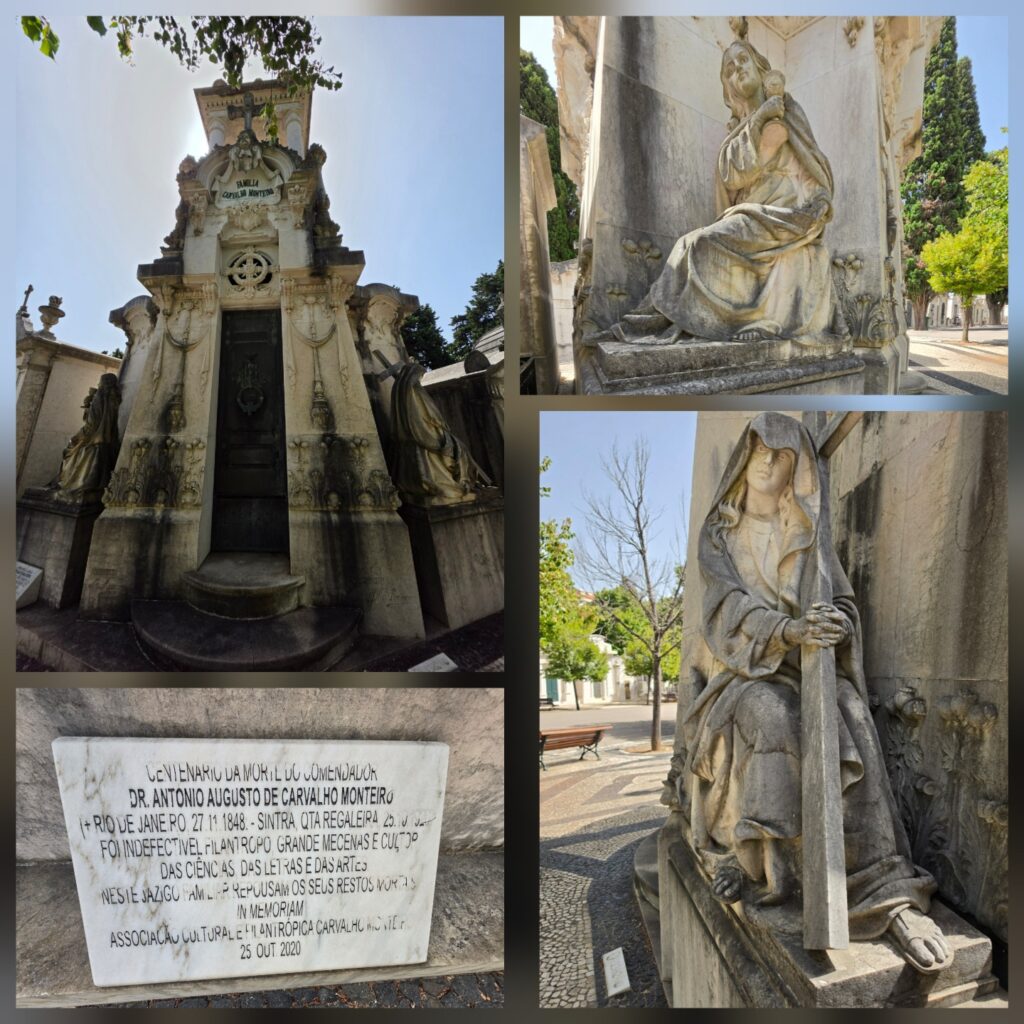
Another grave marked as worth visiting is that of António Augusto de Carvalho Monteiro (aka Monteiro dos Milhões – Monteiro the millionaire). His lasting legacy is Palácio da Regaleira, a stunning piece of architecture in Sintra with its other-worldly Initiation Well that steps the visitor through a subterranean tower 27 meters deep, an architectural metaphor for Dante’s Inferno. Interestingly, the same key opens the door to the tomb, the door to Regaleira, and the door to Monteiro’s palace in the city.
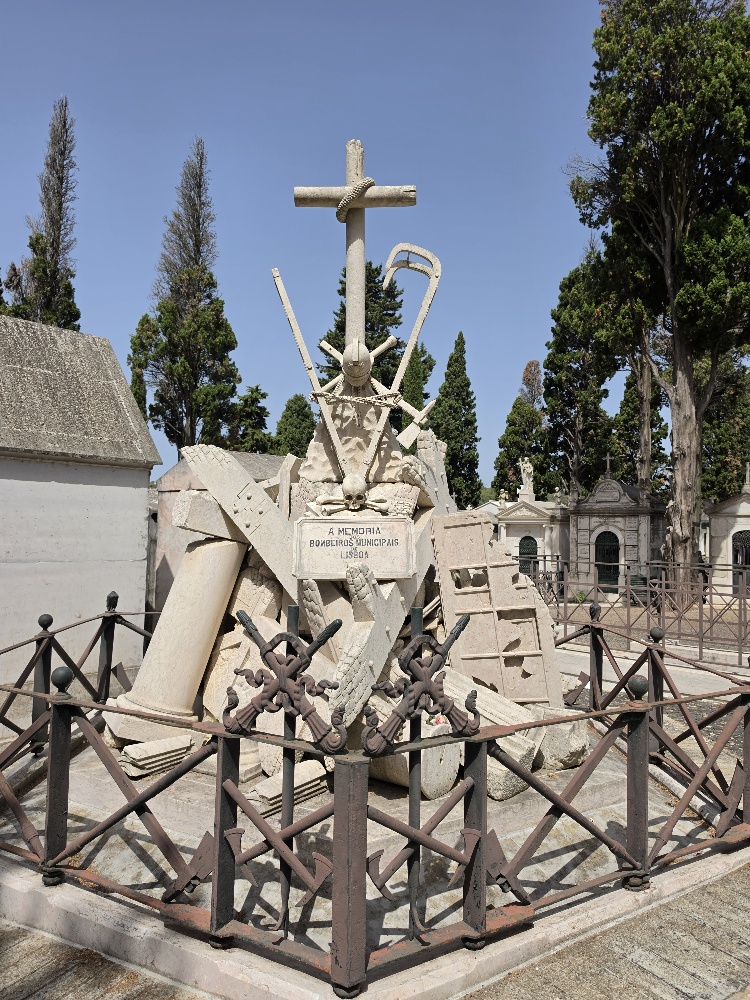
The first time I saw a monument to firefighters was in Cementerio de Cristóbal Colón in Havana, Cuba. Since then, I’ve seen others. The one in Lisbon is impressive. The 1875 monument symbolises the structural ruins and debris left behind by a severe urban fire. I didn’t realise then, but it anchors a dedicated part of the cemetery where city firefighters are buried.
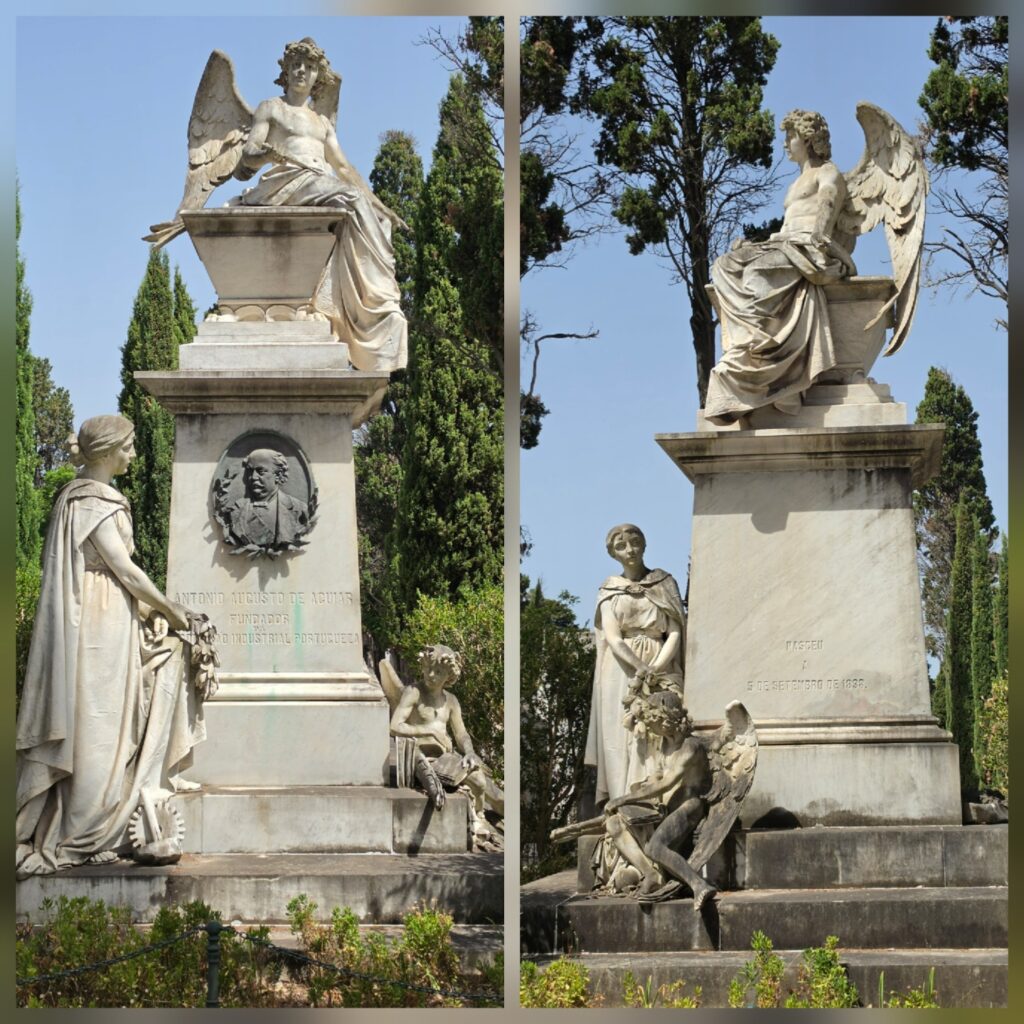
The most impressive monument I saw was that to António Augusto de Aguiar (1838–1887), a prominent scientist, chemist, educator, and politician who served as Portugal’s Minister of Public Works and as a Grand Master of Portuguese Freemasonry. Such was his fame that when Emperor Pedro II of Brazil visited Lisbon in the 1800s, top of his list of things to do was attend one of Aguiar’s lectures.
In the 1800s, Portuguese university culture was strictly formal, rigid, and traditional. However, Aguiar broke this mold with an energetic, engaging, and theatrical presentation style. His lessons were so lively that students frequently broke tradition by giving him enthusiastic standing ovations at the end of his lectures.
Cemitério dos Prazeres translates as Cemetery of Pleasures, and indeed it was a pleasure to visit. I saw too many people disembark the No. 28 tram, cross the road, and queue to go back. Little did they know what they were missing.
.