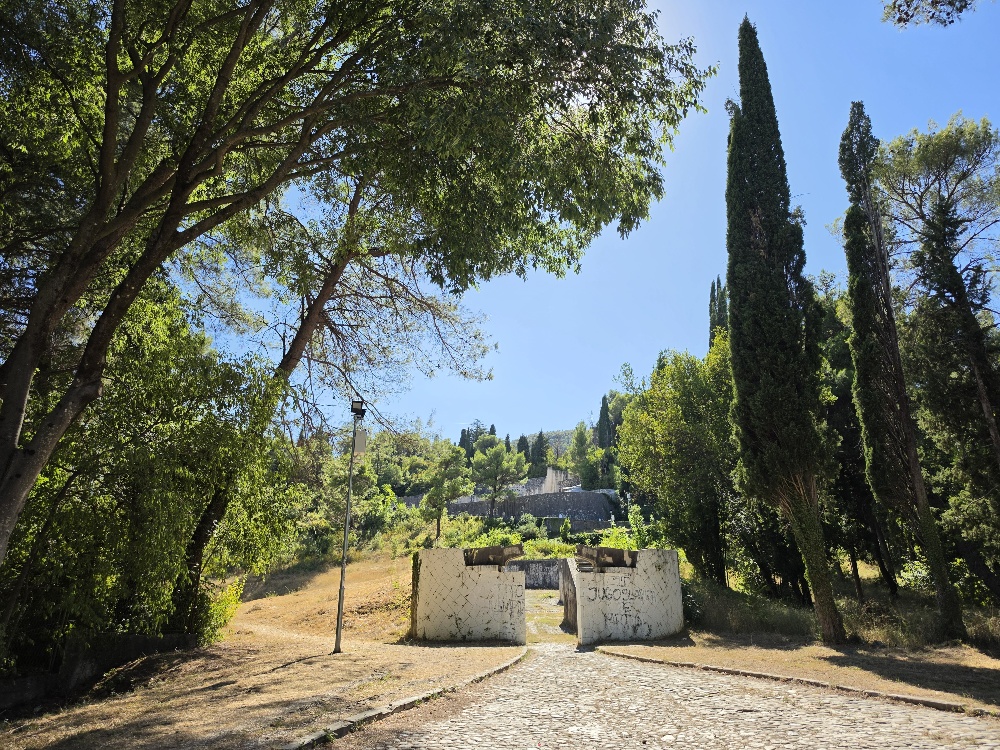
Partizansko groblje u Mostaru (Partisan Memorial Cemetery in Mostar) is a tad surreal. Under the direction of architect Bogdan Bogdanović, work began on the necropolis in 1959 to commemorate Yugoslav partisans who died fighting against the Independent State of Croatia. Completed in 1965, it’s now falling apart at the seams.
Unlike other parts of the city, this was nearly deserted. A group of four and us. That was it. We climbed the steps, not quite sure what to expect. Reviews had ranged from ‘a fascinating must-see’ to ‘dangerous, best avoided’.
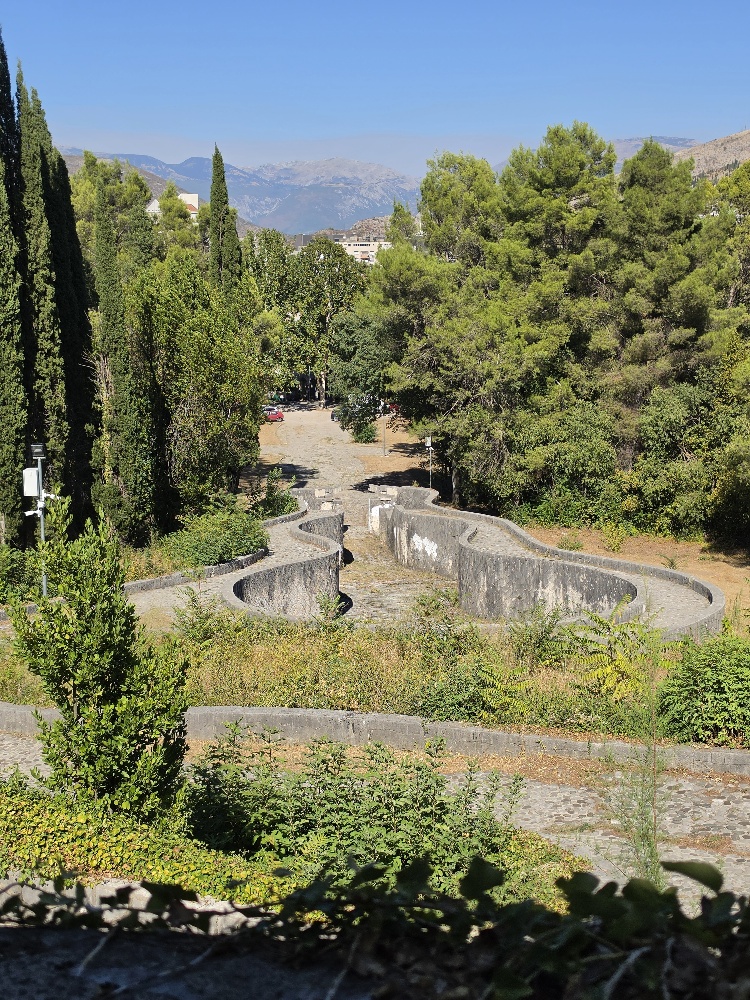
The cemetery itself represents Mostar. The Neretva’s river stones were used throughout the pathways; the original watercourse running through the memorial represented the Neretva dividing the city; and the rising terraces echo the surrounding hills.
Chris Leslie, writing about it in an article for The Guardian in 2023 said:
Bogdanović was commissioned to design dozens of monuments and memorials across Yugoslavia after the second world war. His memorials would blend into the landscape, sometimes taking over and becoming the landscape itself. His underlying message in all his work was “life overcomes death”; his structures were conceived as public parks, sites of everyday life that bring the living and the dead together.
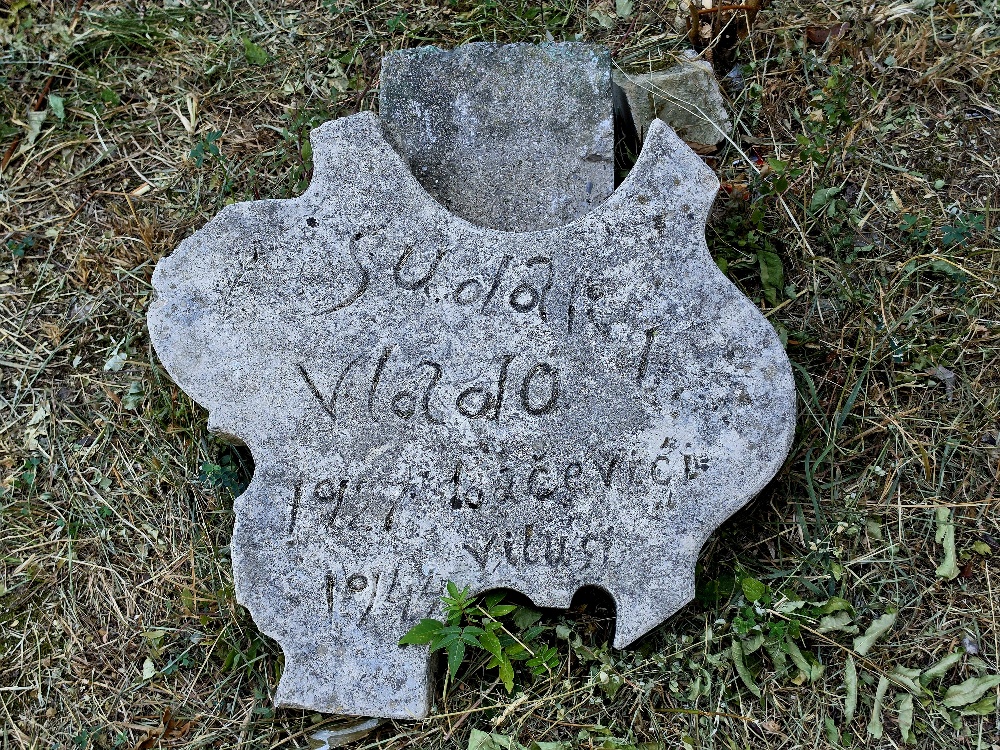
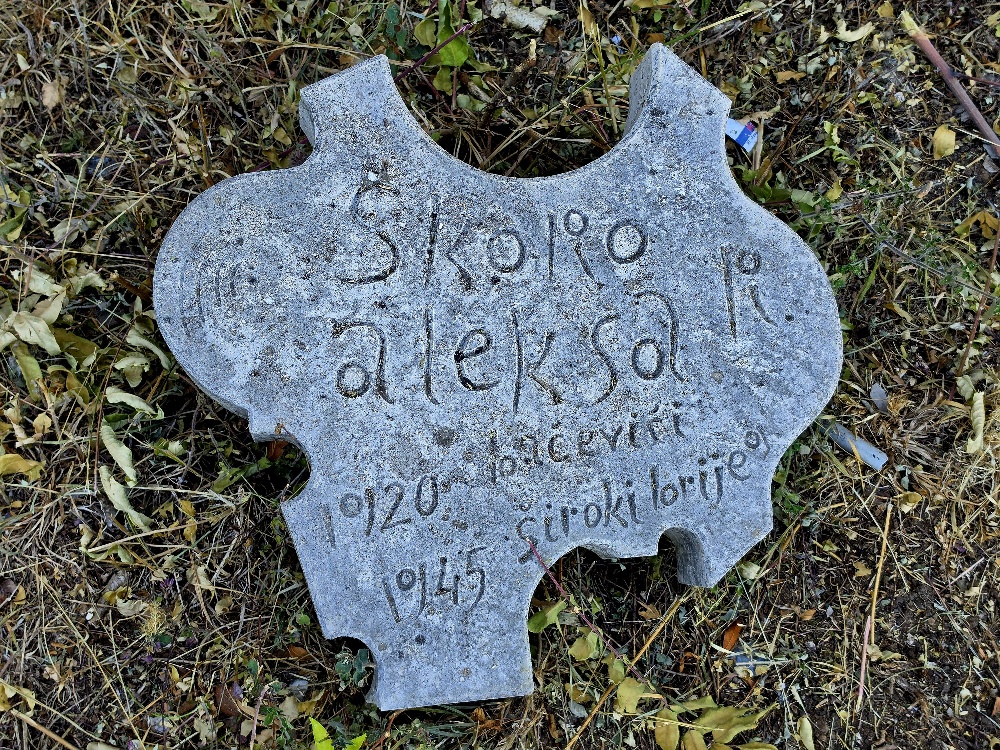
I was curious about the stones – they all looked alike. And all lay flat. Some in pieces. Some whole.
Vladimir “Vlado” Sudar, born 18 July 1927 in Bačevići near Mostar, who died in 1944 at Vilusi. The Partizansko research project identifies him as a Partisan fighter.
Aleksa R. Škoro, born in 1920 in Bačevići, who died in 1945 at Široki Brijeg.
Reuf (Mustafe) Zupčević (1923, Mostar – 1944, Pohorje) — a Partisan fighter.
The cemetery’s research gives quite an interesting biography: Reuf finished commercial academy and was a footballer for Velež Mostar. He joined SKOJ and was expelled from school for revolutionary activity. He was arrested by Chetniks in Mostar in March 1943, handed over to the Italians, and imprisoned at Mamula and later Visco di Udine. After Italy’s capitulation, he joined the Slovenian Ljubo Šercer Brigade and was killed in fighting in Slovenia near Ruše, close to Maribor, in May 1944.
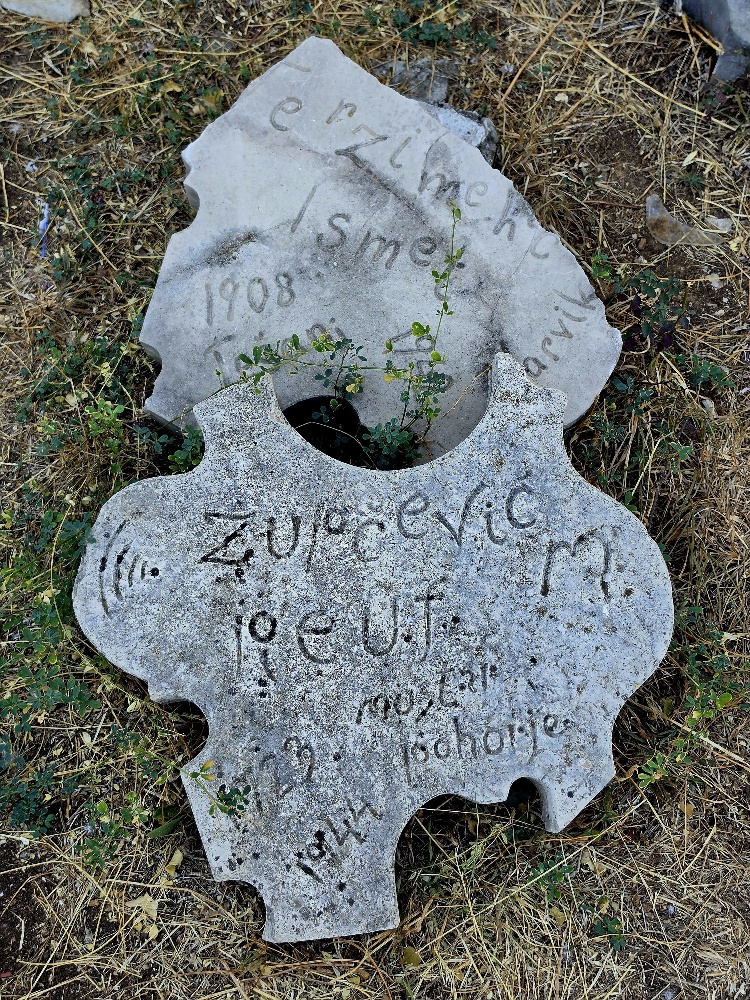
Bosniaks/Muslims, Croats/Catholics, Serbs/Orthodox and others – those who later would fight each other were fighting a common enemy.
During the second world war, Mostar was known as the Red City because of its particularly strong resistance, carried out by fighters who were Serbian, Croatian, Muslim, Jewish and other ethnicities. Most of the partisans who died in the cause were very young, and they are memorialised on stones designed as chopped-down trees to symbolise fallen youth.
Architecturally, it’s amazing. To this uneducated eye, at least. The stone well once overflowed, cascading water down the terraced ossuary.
The central circular structure was part of Bogdan Bogdanović’s water symbolism: water originally flowed through the memorial, evoking the Neretva and the tears of the fallen.
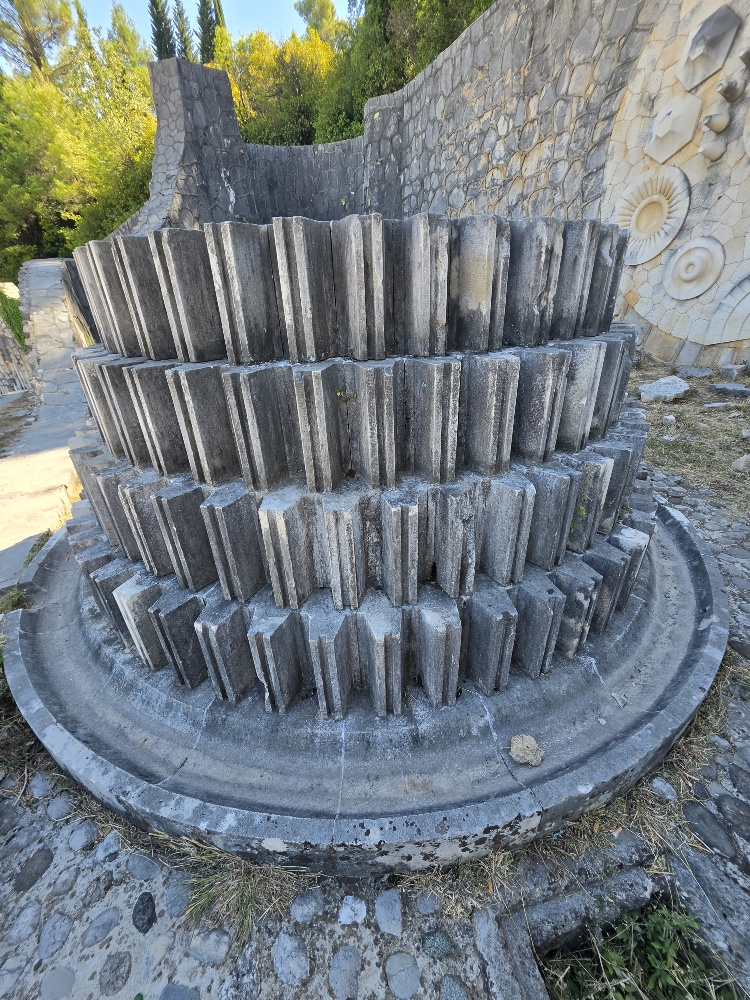
Scroll to the end of the Guardian article to see a photo of this lit up at night.
The ossuary is far from conventional. The low, circular, stone memorial structure, located within the terraced landscape of the cemetery, houses the remains of around 540 fighters killed in battles across Yugoslavia.
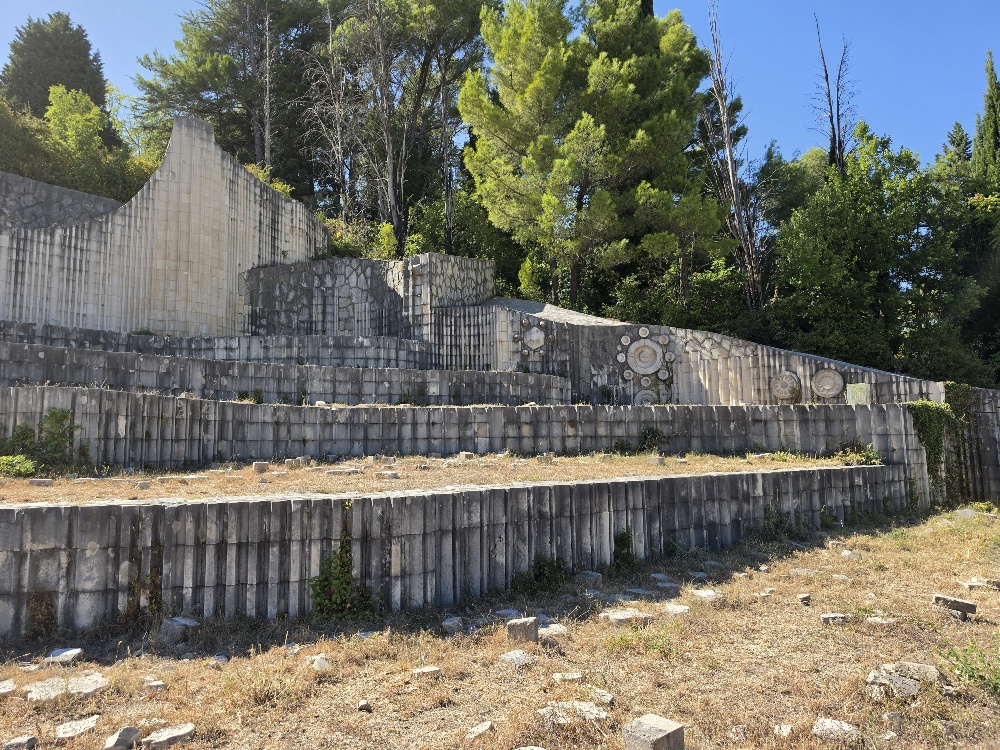
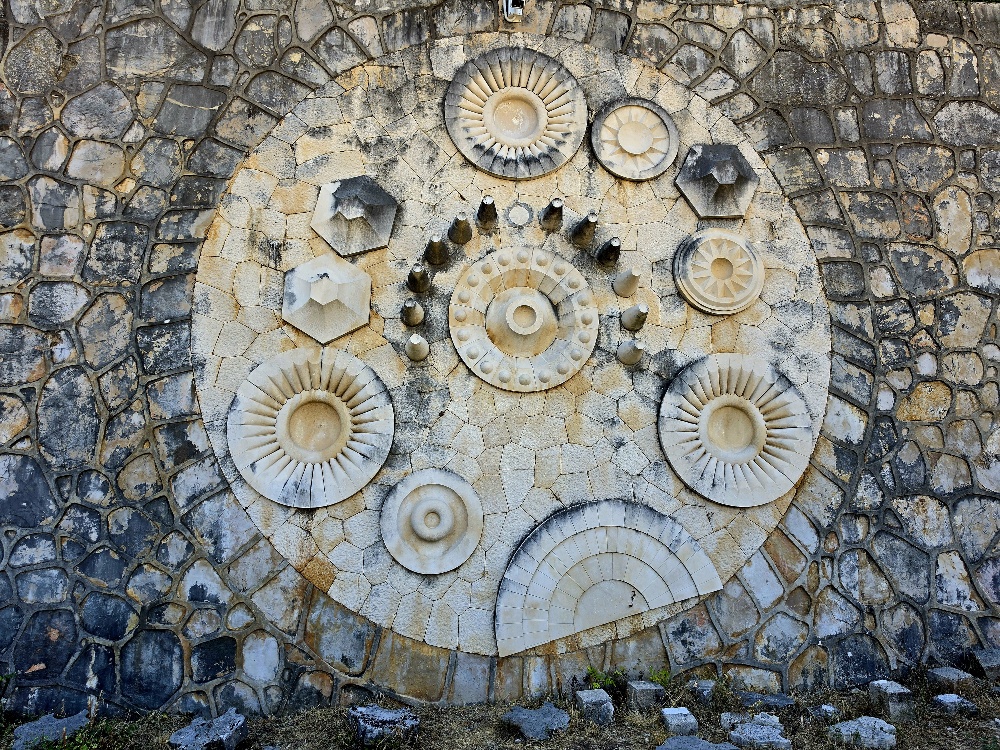
There’s a wonderful mosaic on the top wall, intended as a ‘poetic representation of the cosmos’.
Bogdanović conceived the cemetery as an “afterlife city” and as a kind of bridge between the world of the living and the world of the dead. The cosmic imagery gives the memorial a sense of timelessness and places the individual deaths within a much larger natural/cosmic order.
I liked this. A lot.
It is beyond sad that this necropolis is coming under attack. Leslie writes:
The most recent full-scale attack on the cemetery was in June 2022, when hundreds of stone flowers that bore the names of the anti-fascist fighters, their places of birth, and the places and years in which they were executed, were smashed to pieces.
If you’re in Mostar, it’s worth going out of your way to find it.