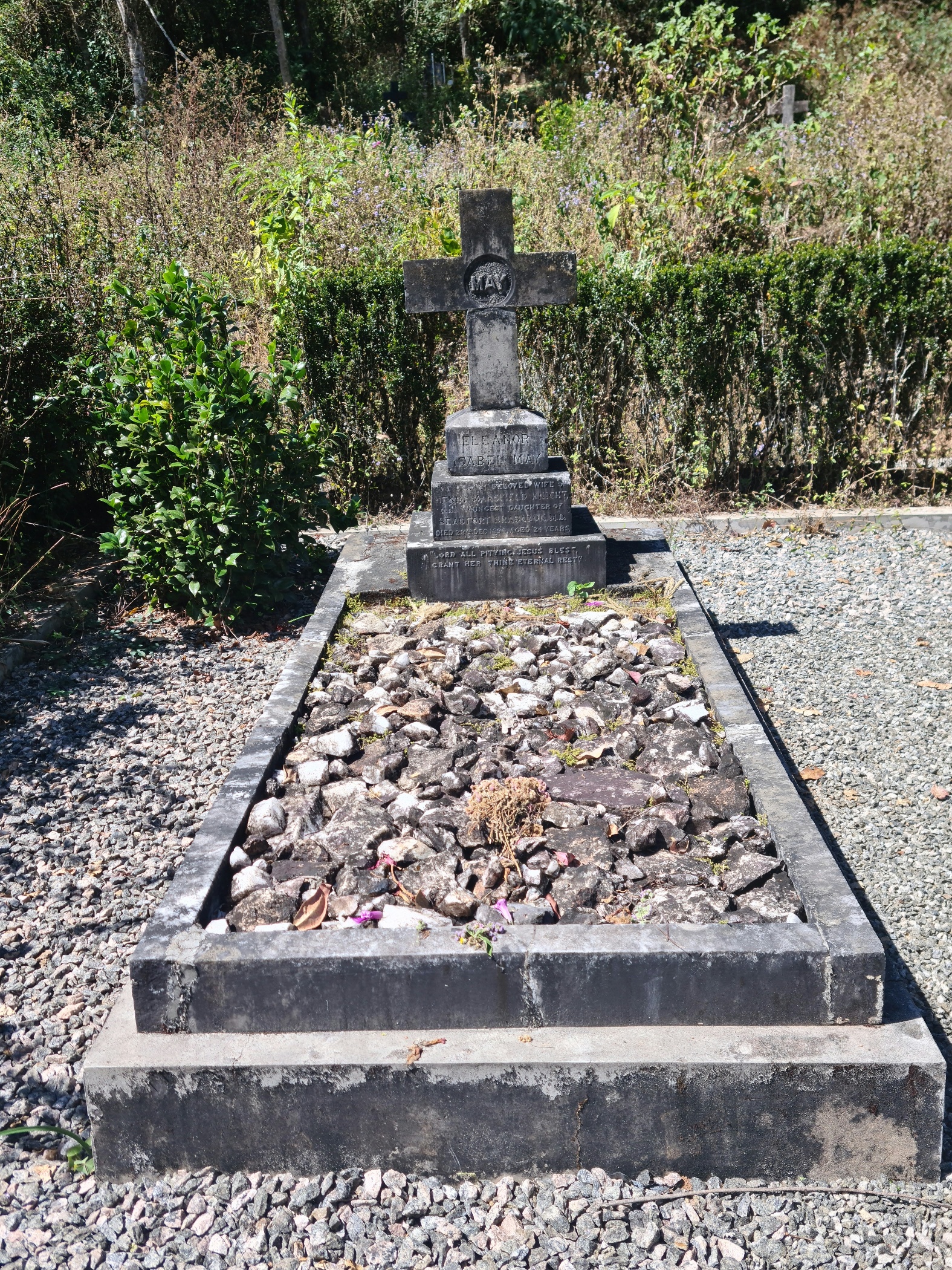
Visiting Munnar, I was keen to find the grave of Eleanor Isabel May Knight, whose 1894 grave predates the cemetery in which it lies, the cemetery in turn predating the church that stands at its foot.
It’s said to be one of the few graveyards in the world where the cemetery precedes the church.
At the back of the CSI Church in Munnar, up a steep hill, are steps to the top. It’s quite the climb. I ignored the sign saying I shouldn’t start up the road – I’d come too far to be turned back.
Right there, on top of the hill, is a grave from 1894, that of Eleanor Isabel. Eleanor came to India with her husband Henry, who was all about tea plantations. They’d made their way to Munnar via Sri Lanka and Bodinayakanur, in Tamil Nadu. When they arrived in Munnar, they went for a walk in the hills and from this particular point, Eleanor, overcome by the beauty of what lay before her, is said to have turned to Henry and said: ”Should I die, I should be buried here.”
Was she tempting fate?
Two days later, at the age of 24, she was dead.
Unknown to her she’d contracted cholera while in Bodinayakanur. The following day, at 2 pm, she was buried in that exact place. Lord Henry would later give the hill to the church to be used as a cemetery for others.
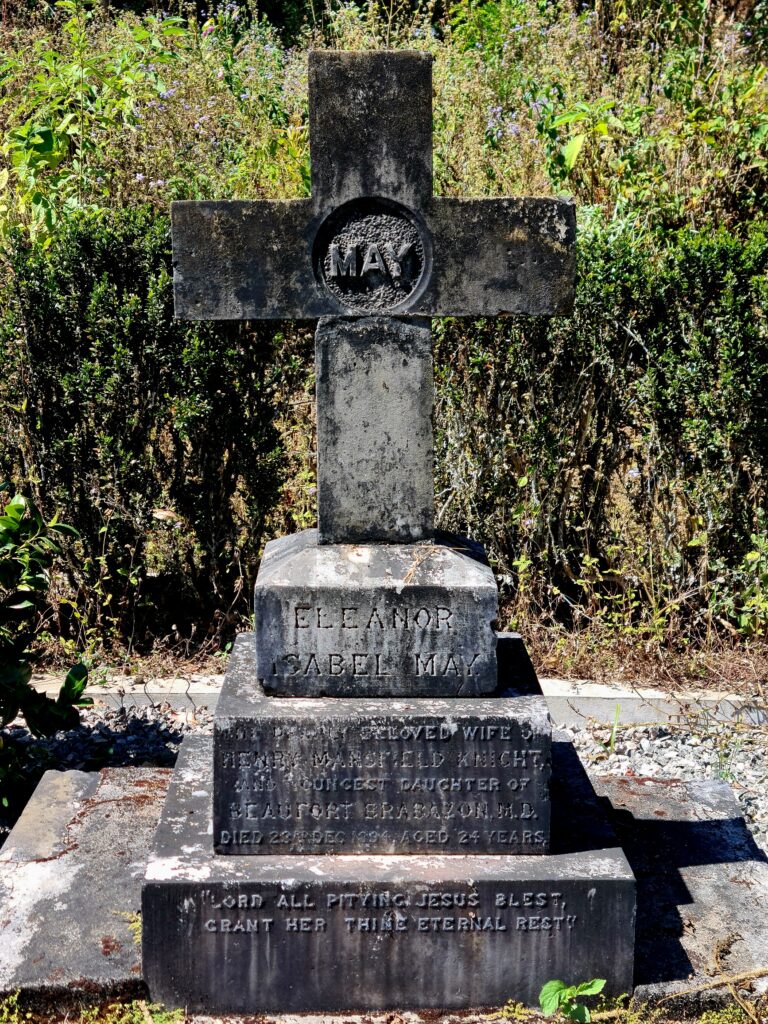
The graveyard is much overgrown, nothing like the Commonwealth graveyards I’ve seen. But then again, these were planters, not soldiers.
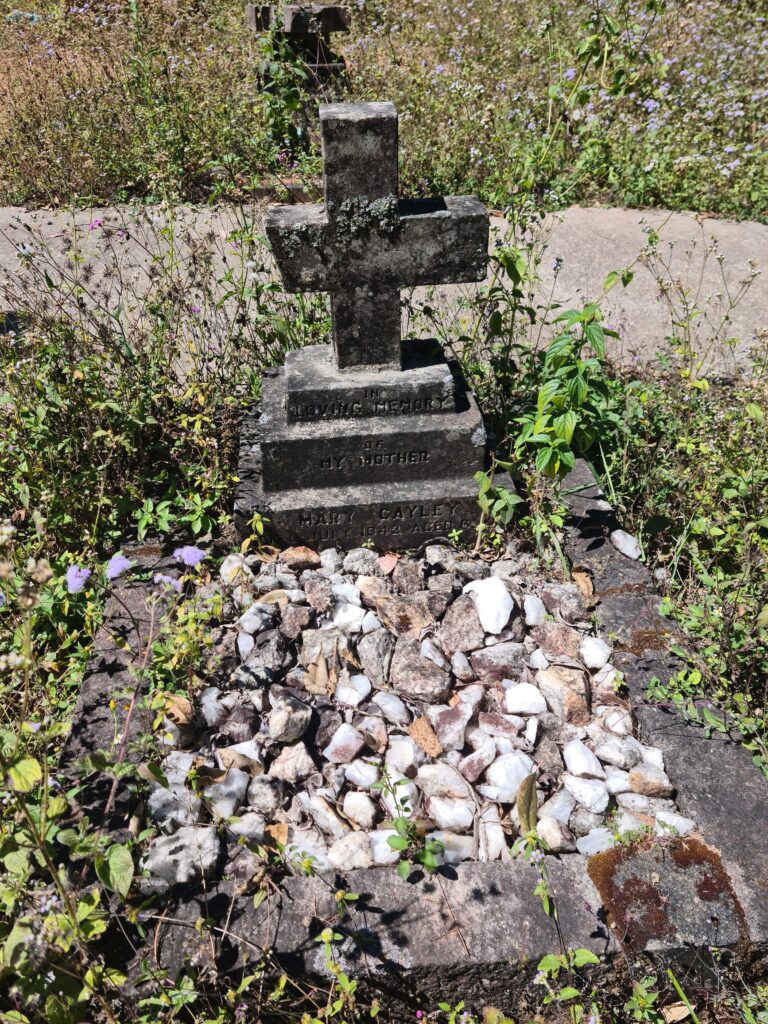
I could find nothing at all about Mary Gayley.
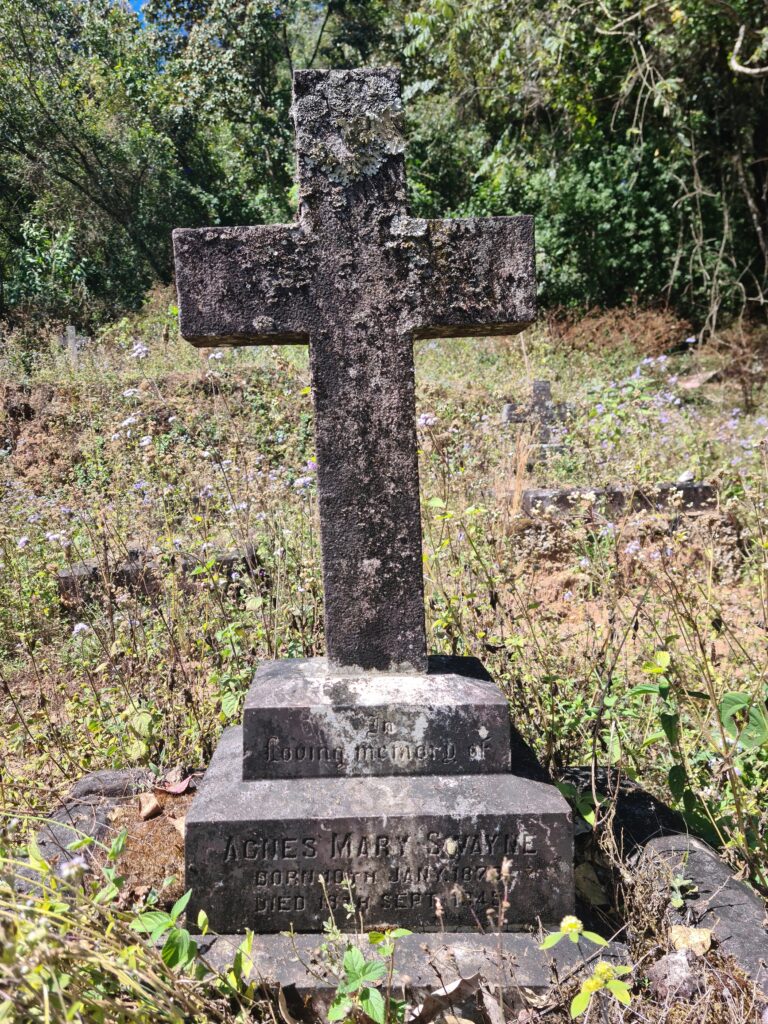
Agnes Mary was married to a planter, James Clement, who had died of heart failure five years before she died of TB. I wondered why she didn’t go back to England. Why did she stay?
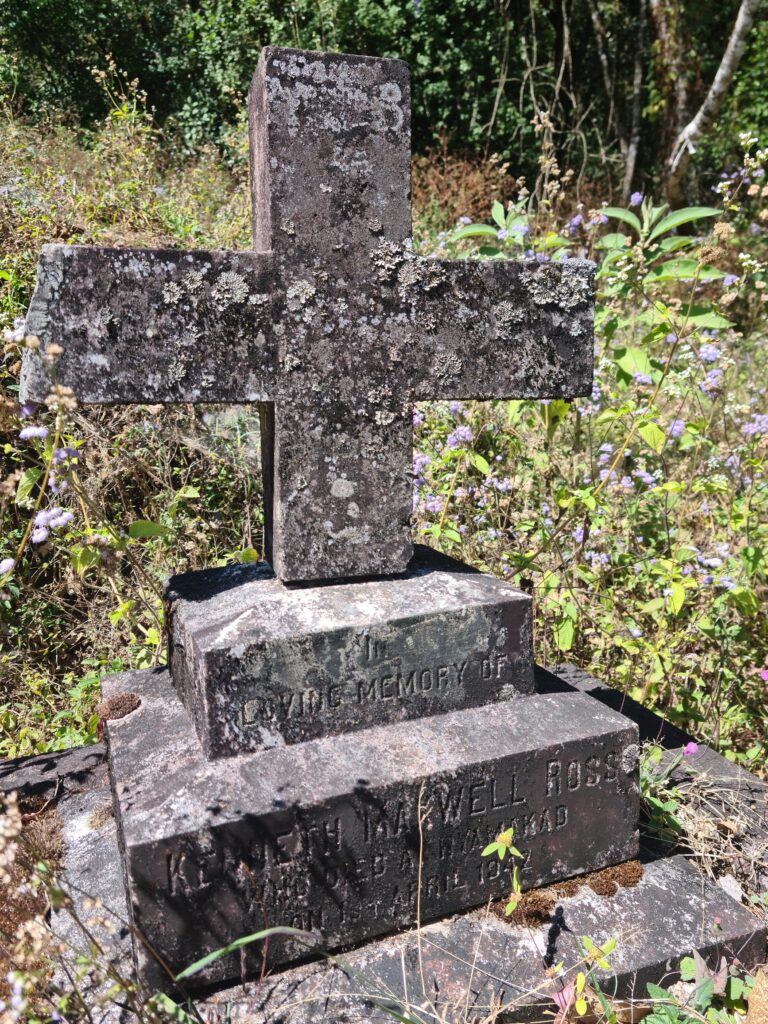
Kenneth Maxwell Ross was another planter who died of throat cancer, aged 52. I wonder what brought him to India? What did he do before he set out? Did it meet his expectations?
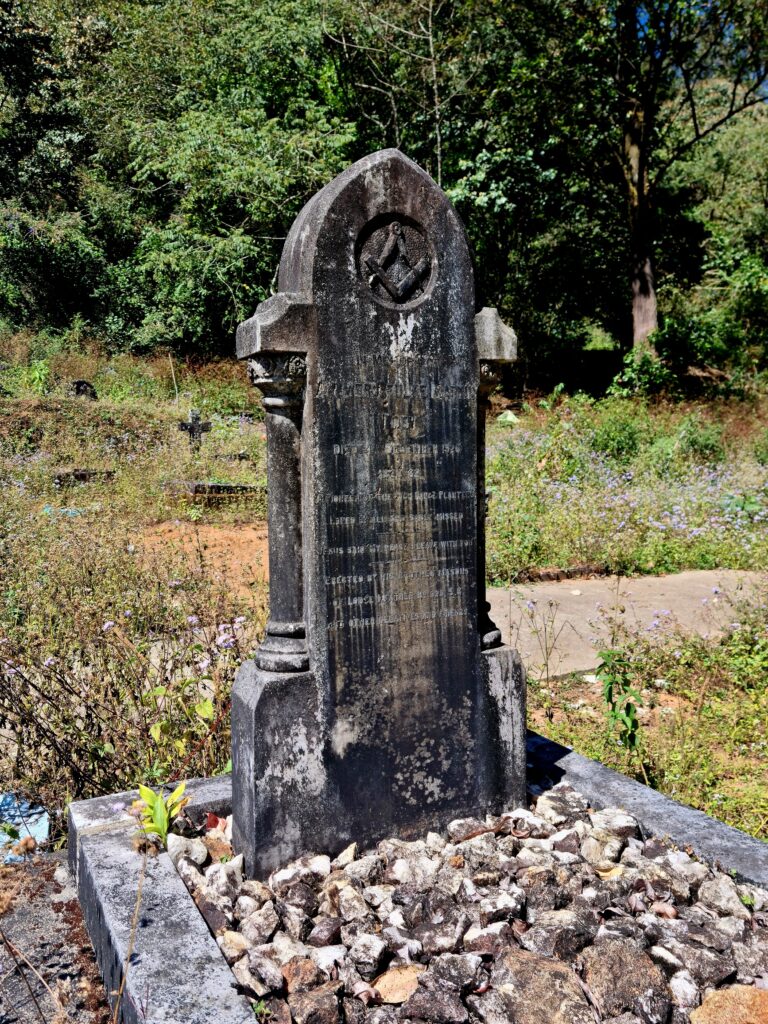
An excellent post on the Mysterious Munnar blog, gives some detail about another grave I found:
One other grave of importance in this cemetery was that of Aylmer Ffluke Martin that was constructed in 1926. Martin, who was known as Toby in the high range of yore, was a dynamic pioneer planter, who opened estates, did extensive survey of the region, served Finlay Muir & Co as its first labour manager and later helped establish a labour recruitment office in Tamil Nadu for the company to recruit Tamil workers for the plantations.
Toby lived and worked in India for 31 years with a single break and went to England on furlough at the end of this period. He returned to become the director of the famous United Planters’ Association of South India (UPASI) in 1914 and later manager of an estate. He died there in 1926.
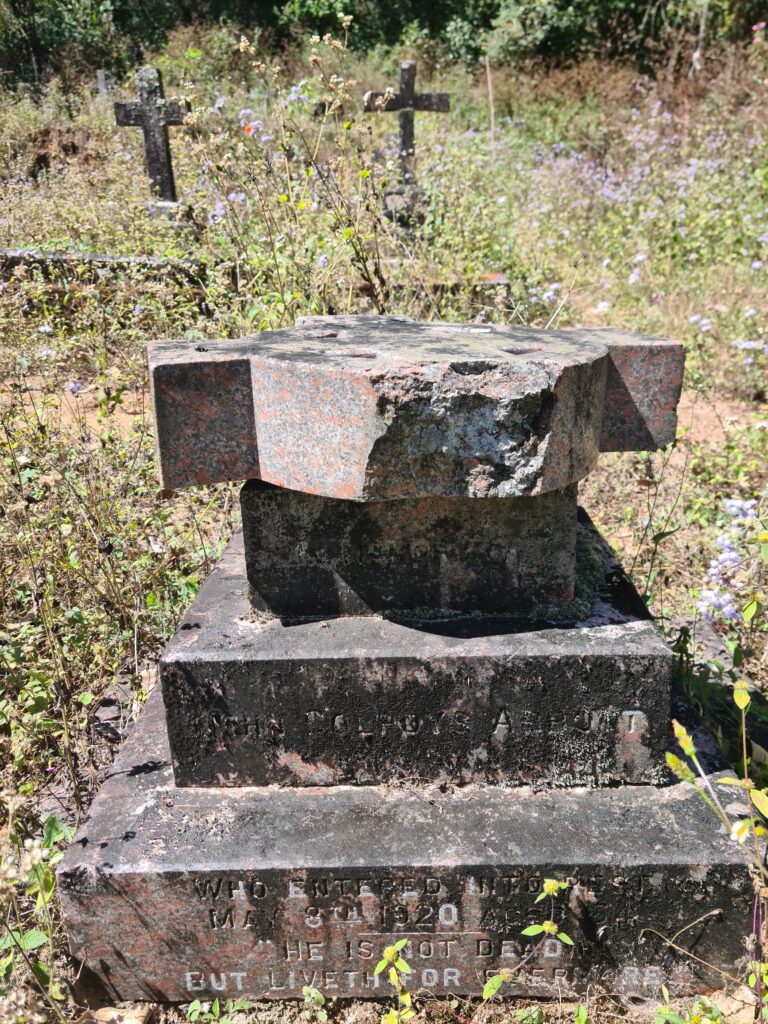
I was intrigued by the fallen Celtic cross and wondered if there was an Irish connection. I can barely make out the name. Nothing like it is listed in the 24 graves noted by the Families in British India Society.
Lower down the hill, the cemetery seems still active. Though the pallbearers have some job bringing the deceased home.
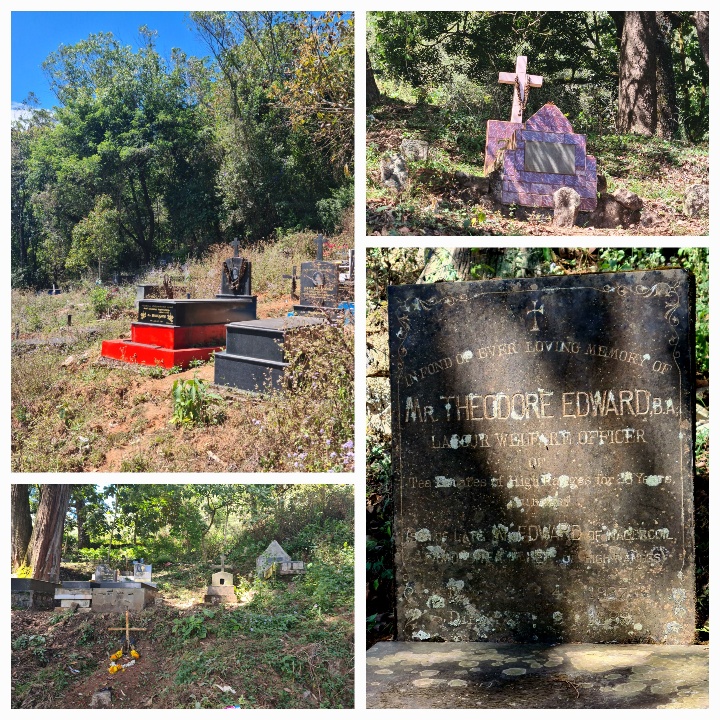
It was a lovely but sobering experience. And while it was inspiring to see these stones still standing, marking the passage of time and the passing of people in a place so very far from home, it tilted me a little more towards cremation. Who will be left to tend my grave when I am gone?