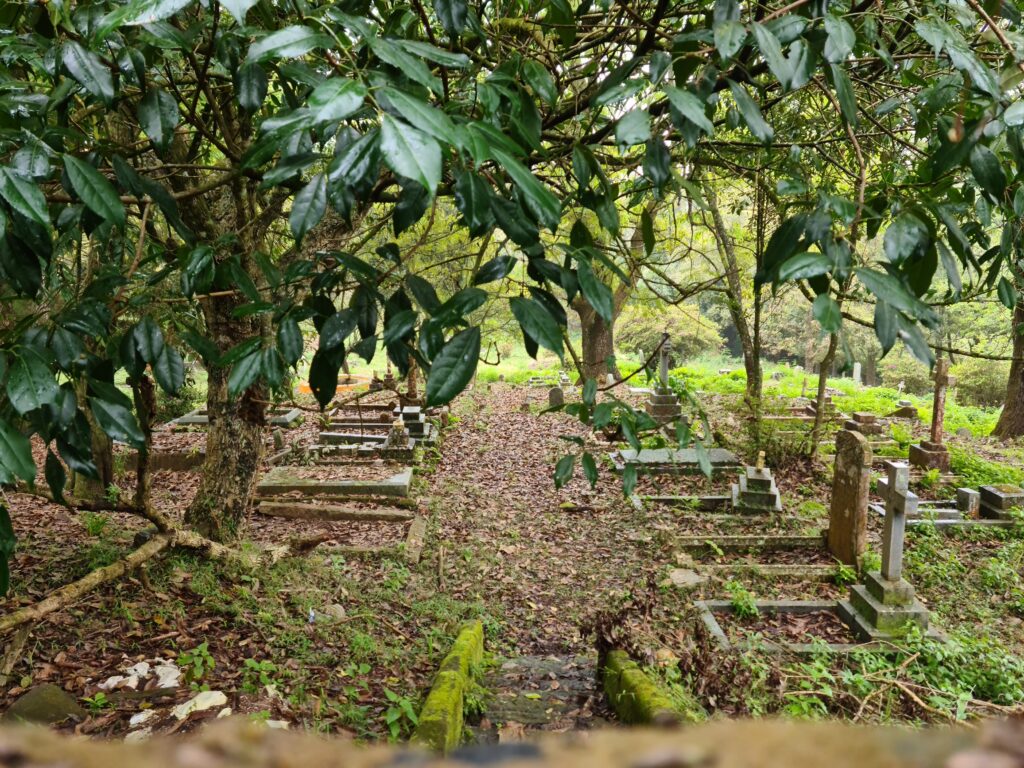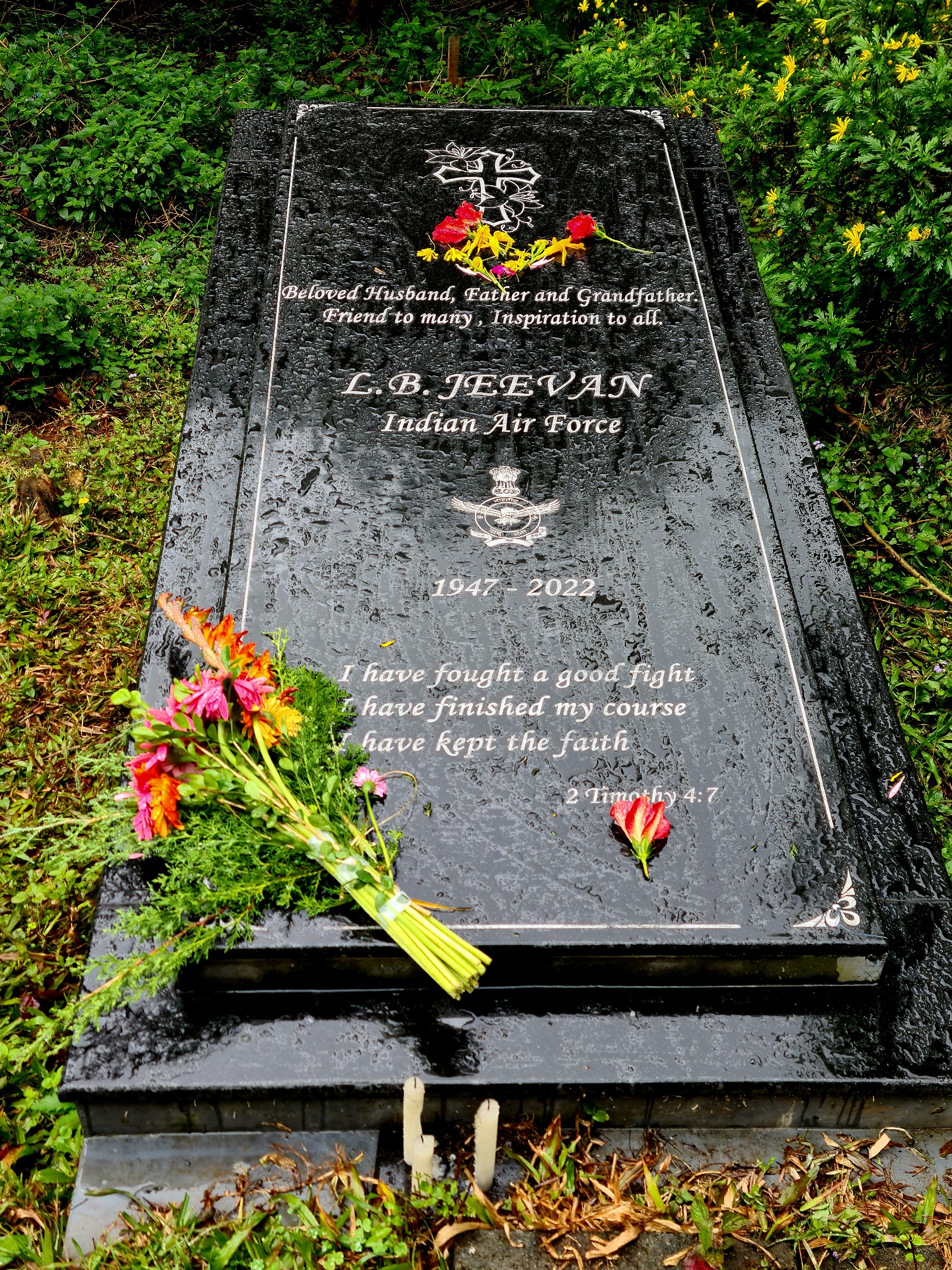
While spending a few days in Ooty, a hill station in the Nilgiris in the Western Ghats, we drove over to Coonoor in search of Tiger Hill Cemetery, an old British Cemetery dating to the days of the Raj.
It took some finding.
Web reviews variably showed it as open and permanently closed.
The road we needed in the middle of a tea plantation was barricaded, so we continued on foot.
The road turned into puddles and mud before we saw the side proclaiming it to be the cemetery we were after.
Yet far from the 500 or so graves reported to be there, there was more like 100 and few, if any, were British.
The entrance, too, wasn’t nearly as grand as the pictures on the web had suggested.
This must have been the Old Tiger Hill Cemetery.
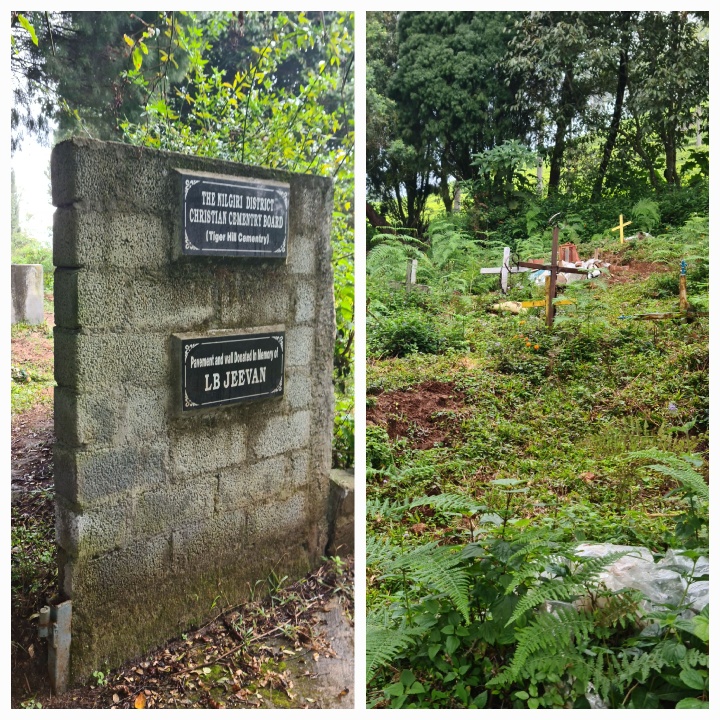
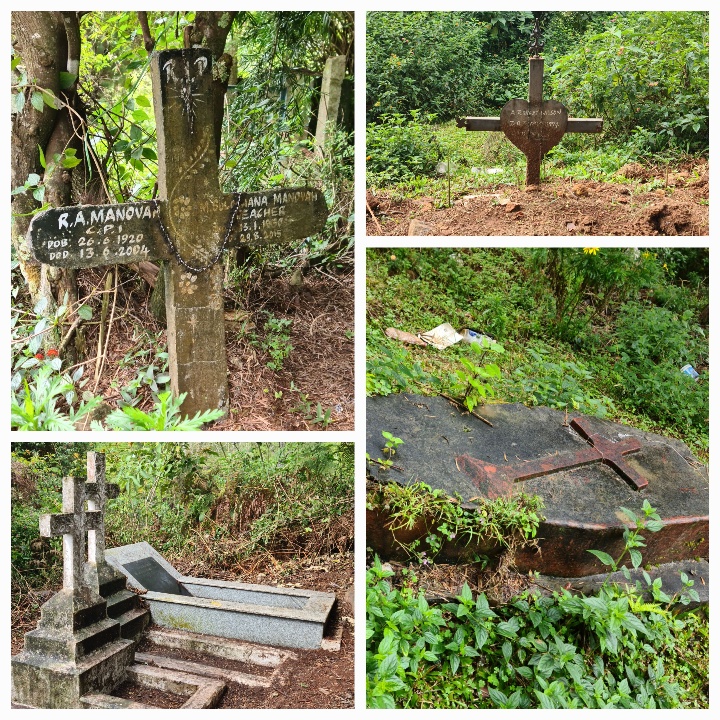
We wandered around, paid our respects, and started to make our way back to the car.
On the hillside, local women harvesting tea leaves waved at us.
Reluctant to give up, we decided to check once more, back to where the road gave out and then on a little. Just in case.
And there it was.
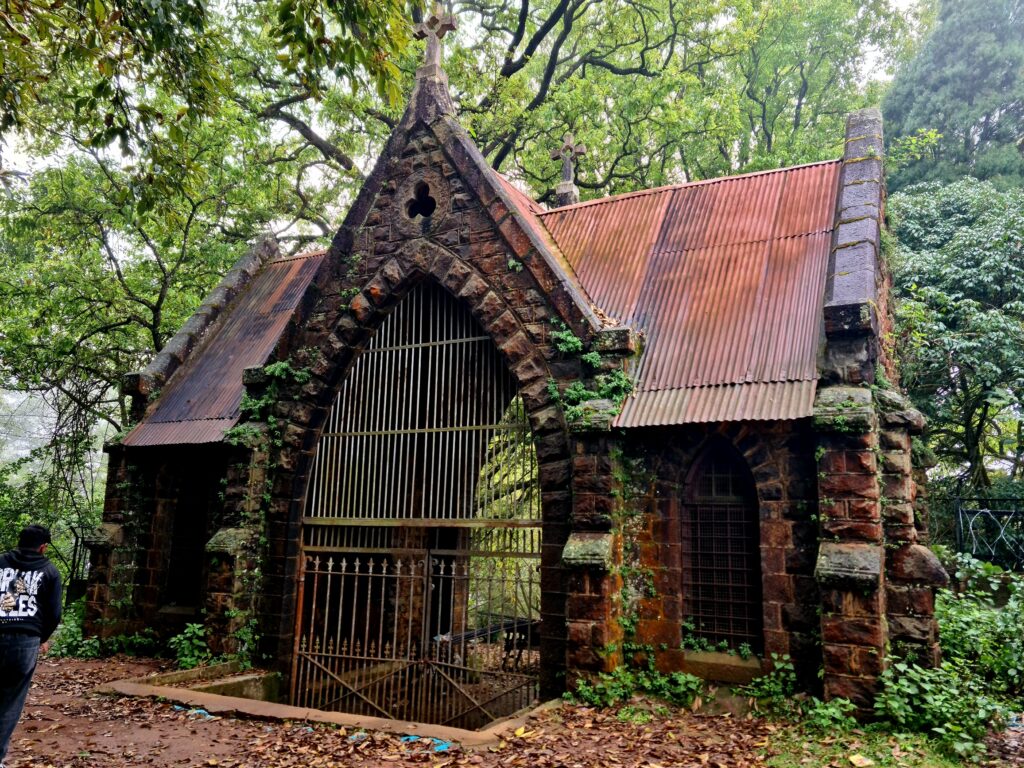
Surrounded by tea plantations, the new Tiger Hill Cemetery was opened in 1905.
With its remote location amidst mist-covered hills, Tiger Hill has developed a mystical reputation and has become a destination for thrill-seeking tourists and film-makers. Unfortunately, it has also drawn in undesirables who have deliberately or unintentionally damaged the headstones, and its lush grassy areas have been equally attractive to huge lumbering gaur (Indian Bison), and even to elephants, which have wreaked even greater destruction. It is hoped that the new, higher, reinforced perimeter wall, to which BACSA have contributed support, will provide new protection for the foreseeable future.
Within the cemetery there are about 500 British graves. Planters and their families predominate and there are military and government workers, as well as many connected with the railways.
Sadly, the gates were locked and there wasn’t a hope of climbing over the wall. I’d have done, it though, were it not for the rolls of barbed wire being a major deterrent. I’d not have considered it trespassing as I believe that cemeteries and churches should be open as places of public worship and reflections.
The local law might not have agreed.
That day, three young lads were preening in front of cameras, posing for photos and videos that no doubt would end up on their social media with only a cursory reference to the cemetery.
I’d have liked to have seen the fountain with the mourning angel. And to have read the epitaphs on the headstones of those who’d first arrived in the Nilgiris more than 100 years ago. As it was, we had to make do with peering through the locked gate.
So sad.
I’m glad we made the effort.